COVID-19 Coronavirus Notice

COVID-19 Coronavirus Notice

Updated 2 July 2020

If you are reading this message, please be aware of travel restrictions in place as part of measures to contain the spread of the COVID-19 "Coronavirus" and its symptoms. Japanese authorities are refusing entry to individuals from, or who have been to, a list of over 100 countries (More information). All other visitors must apply for a visa, and undergo a quarantine upon entering the country. Within the Japan, there are no longer any travel restrictions, and most public attractions have re-opened with precautions for sanitation and social distancing. In short, travel to Japan is not recommended at this time, until the situation normalises. I will not be editing my individual articles to reflect this, but again, please keep this in mind when reading them.

Friday, March 10, 2017

Akihabara Walk

This article is based on visits made on Sunday, 30 March 2014, and Sunday-Tuesday, 13-15 November 2016.

Previously on Sekai Ichi, I checked into my hotel in Akihabara.  With multiple train and subway lines serving the area, and the hotel itself situated above the train station of the same name, this proved to be a convenient base for all my excursions in and around Tokyo.  But Akihabara (秋葉原, lit. 'autumn leaf field'), or "Akiba" for short, is a destination in its own right, so allow me to take you on a virtual tour of this neighbourhood

First, some orientation.  The major train station in the area is the cross-shaped Akihabara Station, which serves the Yamanote loop line to the north and south, the Chuo-Sobu line to the east and west, among other lines.  To the west of the station, the Chuo-dori (中央通り, Chūō Dōri, lit. 'central road') road also runs north-to-south.  Most of the major businesses in Akiba are situated along Chuo-dori.  On Sundays from 1:00 to 6:00 PM, a section of Chuo-dori is closed to automotive traffic.

I might as well briefly go over some history while I'm at it.  As a centre of business, Akiba's character has shifted multiple times over its history.  When Akihabara Station opened in 1890, many produce markets sprang up around it.  This entrepreneurial spirit led to various specialisations: electronics and radio parts in the mid-20th century, personal computers in the 1980s, and anime-related, or otaku (オタク), merchandise in the 2000s.  Akiba is also the birthplace of maid cafes, restaurants where waitresses cosplay as French-style maids.  I would later try out a maid cafe elsewhere in Tokyo, but I'm getting ahead of myself.

Many of Akiba's major locations stand to the west of the station, so start your journey by taking the Electric Town Exit on its west side.  Turn to the right (north) from this exit, and you will find yourself on the UDX Plaza.  It is spanned by a pedestrian bridge leading toward the UDX Building on the north end of the square.  The UDX Building hosts numerous businesses, including a tourist information centre and the Tokyo Anime Center, a small but free space which hosts exhibits on recent shows and a shop selling various character goods.  The AKB48 and Gundam Cafes, one of which I have visited, are also situated along the square.

Conversely, turn left (south) from the Electric Town Exit, and you will find yourself in concrete canyons like these.  Due to the dearth of floor space, many shops are spread out among multiple floors, connected by stairs, elevators, and/or escalators.  The Yamada Denki store, the building on the left with its recessed glass tunnels, is such an example of this practise.  The important thing to be aware of in these multi-storeyed stores is that there are checkout counters on each floor, and you must pay for goods picked up on that floor before moving to a different one.

You may also have noticed a big block of scaffolding in the above picture.  That would be Radio Kaikan (ラジオ会館, Rajio Kaikan), a megastore which was undergoing renovation during my 2014 visit.  The original 8-storey building, hosting many electronic-part stores, was the first skyscraper in Akihabara when it opened in 1962.  However, concerns about its structural safety led to it being torn down in 2011 and replaced with a new building, which finally opened on 20 July 2014, just too late for me to catch it at the time.

Radio Kaikan in March 2010, before it was torn down and rebuilt.
street viewer [CC BY 2.0], via Wikimedia Commons
This is what the old Radio Kaikan looked like...

...And this is what it looks like post-reconstruction.  It now stands 10 floors and 46.5 metres (152.5 feet) above ground.  The shops in its new incarnation are more otaku-focused, but its iconic neon signboard and rainbow window-banners were faithfully re-created.

Chuo-dori is the main thouroughfare around which Akiba is centred.  One brand you'll see a lot of along Chuo-dori is the electronics retailer Sofmap (ソフマップ, Sofumappu), which has nine branches of varying specialties in Akiba alone.  Many stores in the area, including Sofmap, will offer sales-tax rebates for shoppers coming in from overseas.  Just make sure what you're buying is compatible with the electricity and region-control systems of your home country!  International products may also be available.

A walk down Chuo-dori represents many of the goods and services that Akihabara has to offer.  In this road alone, there are stores selling personal computers, computer components, cell phones, cameras, video games, anime DVDs and Blu-rays, manga books, cosplay outfits, and other anime merchandise, as well as video arcades, maid cafes, and other restaurants.  Akiba is also a hub for selling dojinshi (同人誌, Dōjinshi, lit. 'same-person document'), fan-made comics and software; the two towers of Comic Toranoana (コミックとらのあな, Komikku Toranoana), seen above, are a popular place to buy them.  Although, some of... well, okay, most of the stuff is more adult-oriented, so you should stay away from certain floors, or even entire stores, if you're under 18.

Situated a block down Chuo-dori, Don Quijote (ドン・キホーテ, Don Kihōte) is a branch of a department store chain.  They have stores in all but two of Japan's prefectures (sorry, Tokushima and Kochi), plus Singapore, Hawaii, and California.  On its upper floors, this particular location also hosts a maid cafe (on the 5th floor), an arcade (6th-7th floors), and a theatre (8th floor) where the pop-idol band AKB48 play frequent shows.  As their name may suggest, AKB48 is made up of a rotating cast of over 48 members, only 6-8 of whom sing on any given song.  They formed in 2005 and have maintained strong popularity to this very day.  (I certainly didn't expect them to outlast One Direction, I'll tell you that!)  Their fame is such that they have inspired various copycat bands elsewhere in Japan and other Asian countries.

Just because Chuo-dori has the most traffic passing through, that doesn't mean there aren't more places to explore.  The blocks to the west of Chuo-dori are more tightly packed, but offer many pleasant surprises.  For example, Super Potato is situated among these western blocks.  Conversely, for those needing a break from all this technology and fandom, Kanda Shrine is just a few minutes further to the west.

Also located west of Chuo-dori, the big black building is the Akihabara branch of Mandarake (まんだらけ), the self-described "largest manga and anime shop in the world".  Superlative or not, Mandarake specialises in second-hand goods.  They may not always be cheap, but are of generally good quality.  If you want to see what I mean, my article on the used video game store Super Potato (linked above) should give you an idea.  And if you need more Mandarake, they have many other outlets in Japan, most of them across town in Nakano.

There's even more to see if we turn back and head south and east, under the train tracks.  You'll see more small electronics stores, izakaya pubs, and pachinko/slot parlours down this way.  You know, there's something charming about seeing old-style neon signs like these.

Cross on over to the east side of the station, and you will find yourself at the Akihabara branch of the Yodobashi Camera (ヨドバシカメラ, Yodobashi Kamera) department store.  In addition to the usual array of electronic products, this 9-story building includes a restaurant floor near the top, which is common practise for department stores in Japan, and a driving range for golfers on the top floor, which is... not so common.

Finally, taking it all back to UDX Plaza.  This was the scene from my other trip, when the sun finally peeked its way out, and all the people along with it.  Little did I know that this was during japan's spring school holidays, so crowds like this would set the tone for much of that trip.  Fortunately, this was less so when I came back a couple of years later in November, which we will continue on with next time!


Access: The Akihabara district is best accessed by, naturally, Akihabara Station (JR Yamanote (JY), Keihin-Tohoku (JK), Chuo-Sobu (JB), Tokyo Metro Hibiya (H), and Tsukuba Express (TX) lines).  Alternatively, Suehirocho (Tokyo Metro Ginza (G) line) and Iwamotocho (Toei Shinjuku (S) line) stations are 5 minutes away on foot.

From Tokyo Station, take the Yamanote or Keihin-Tohoku line to Akihabara (JY03/JK28, 4 minutes, ¥160).  From Shinjuku Station, take the Chuo-Sobu (Local) line (JB19, 20 minutes, ¥170); if you want to save a few minutes, take the Chuo (Rapid) line instead to Ochanomizu (JC03, 10 minutes, ¥170), then transfer to a local train to Akihabara (2 minutes).

Akihabara Radio Kaikan

Hours: Open from 10:00 AM to 10:00 PM; hours may vary by store.  No regular closing days.

Address: 1-15-16 Sotokanda, Chiyoda-ku, Tōkyō-to 〒101-0032

Directions: From Akihabara Station, turn left out of the Electric Town Exit ticket gates, and then turn right.  Radio Kaikan will be on the left side, before you reach Chuo-dori.

Website: (Japanese)

Don Quijote Akihabara

Hours: Open from 9:00 AM to 5:00 AM the next morning.  No regular closing days.

Address: 4-3-3 Sotokanda, Chiyoda-ku, Tōkyō-to 〒101-0021

Directions: From Akihabara Station, turn right out of the Electric Town Exit ticket gates, then left, and then right onto Chuo-dori.  Don Quijote will be two blocks down on the right side.

Website: (English) (Japanese)

Mandarake Complex

Hours: Open from 12:00 AM to 8:00 PM.  No regular closing days.

Address: 3-11-12 Sotokanda, Chiyoda-ku, Tōkyō-to 〒101-0021

Directions: From Akihabara Station, turn right out of the Electric Town Exit ticket gates, then left.  Cross Chuo-dori and turn right.  At the next traffic light, cross the road, turn left, then take the next right.  Mandarake will be on the right at the next intersection.

Website: (English/Japanese)

Yodobashi Multimedia Akiba

Hours: Open from 9:30 AM to 10:00 PM.  No regular closing days.

Address: 1-1 Kanda Hanaoka-chō, Chiyoda-ku, Tōkyō-to 〒101-0028

Directions: From Akihabara Station, turn right out of the Central Exit ticket gates.  Yodobashi Camera will be on the right side of the plaza immediately outside of the exit.

Website: (Japanese)

Monday, March 6, 2017

Know your Trains: Hokuriku Shinkansen

Update 12 August 2018: Updated with new maps.

A W7-series Hakutaka train at Nagano Station.
Taken on Wednesday, 16 May 2018.
The Hokuriku Shinkansen (北陸新幹線) is a high-speed train line running from Tokyo to Kanazawa, in the Hokuriku region of north-central Japan.  It was originally known as the Nagano Shinkansen, as it opened between Takasaki and Nagano in 1997, in preparation for the Winter Olympics in Nagano the following year.  In March 2015, the line was extended to Kanazawa and renamed to reflect the Hokuriku (北陸) region it now served.  Its top speed is 260 kilometers per hour, or 160 miles per hour.

There are four services on the Hokuriku Shinkansen.  Two of them, the express "Kayagaki" and semi-express "Hakutaka", run the full length of the line.  Of the other two full-stop services, the "Asama" runs between Tokyo and Nagano, and the "Tsurugi" only goes between Toyama and Kanazawa.

Name Colour* Start Station End Station(s) Time** Max. Frequency***
Asama VioletTokyo Nagano 1 hour 50 minutes 1 per hour
Tsurugi Blue Toyama Kanazawa23 minutes 1 per hour
Hakutaka RedTokyo Kanazawa 3 hours 1-2 per hour
Kayagaki Yellow TokyoKanazawa 2 hours 30 minutes 1 per hour
* The colour associated with each particular service on signboards, etc.  Some stations use violet for all Hokuriku Shinkansen services.
** Approximate time between designated start and end stations.
*** Departure frequency is based on March 2017 schedules and are subject to change.

A map of the Hokuriku Shinkansen and its stops, including sections currently under construction.
In its current state, the Hokuriku Shinkansen cuts northwest through the Japan Alps, and then runs west along the coast of the Sea of Japan.  Despite the Nagano-Kanazawa section only having been opened in 2015, further extensions are planned for the line as well.  Phase 3 will extend the line through Fukui to Tsuruga, and is scheduled to open in 2022/23.  Beyond that, the line will eventually be brought down to Kyoto and Shin-Osaka, but construction is not supposed to start until 2030, and may take 15 years to finish.

Name (English) Name (Japanese) Prefecture Asama Tsurugi Hakutaka Kayagaki
Tokyo 東京 Tokyo X I X X
Ueno 上野 X I X X
Omiya 大宮 Saitama X I X X
Kumagaya 熊谷 X I I I
Honjo-Waseda 本庄早稲田 X I I I
Takasaki 高崎 Gunma X I X I
Annaka-Haruna 安中榛名 X I I I
Karuizawa 軽井沢 Nagano X I O I
Sakudaira 佐久平 X I O I
Ueda 上田 X I O I
Nagano 長野 X I X X
Iiyama 飯山 I I O I
Joetsu-Myoko 上越妙高 Niigata I I X I
Itogawa 糸魚川 I I X I
Kurobe-Unazuki-Onsen 黒部宇奈月温泉 Toyama I I X I
Toyama 富山 I X X X
Shin-Takaoka 新高岡 I X X I
Kanazawa 金沢 Ishikawa I X X X
Komatsu 小松 Ishikawa
Under construction
Scheduled to open 2022/23
Kaga-Onsen 加賀温泉
Awara-Onsen 芦原温泉 Fukui
Fukui 福井
Nan'etsu* 南越
Tsuruga 敦賀
Legend
X: All trains stop at this station.
O: Some trains stop at this station.
I: No trains stop at this station.
*Tentative name for stations to be newly created

Notable stops
  • Tokyo/Ueno: The largest city in Japan and the world.
  • Omiya: The capital city of Saitama Prefecture, and home to a popular railway museum.
  • Takasaki: Where the Joetsu Shinkansen branches off.
  • Karuizawa: A mountain resort town with upscale shopping and beautiful natural sites.
  • Nagano: Site of the 1998 Winter Olympics.
  • Joetsu-Myoko: Where JR East's coverage area ends and JR West's begins.
  • Kurobe-Unazuki Onsen: Transfer point for the scenic Kurobe Gorge Railway.
  • Toyama: A transit hub for visiting Takayama and the Tateyama-Kurobe Alpine Route.
  • Kanazawa: A historically-preserved city, famous for the Kenroku-en garden.
All four Hokuriku Shinkansen services use the new E7-series (also designated as W7) trains with 12 cars.  The front car of these trains (facing Kanazawa) is a GranClass car.  All seats on these trains, even in the ordinary sections, have their own electrical outlets, a first for the Shinkansen.  However, on Tsurugi services, cars #8, 9, 10, and 12 are not used for passenger seating.  Furthermore, some Asama services use older E2-series trains with 8 cars, instead of the more modern E7s.

Service Total Cars Non-Reserved Cars Reserved Cars Green Cars GranClass Cars
Asama 12 5 (Cars #1-5) 5 (Cars #6-10) 1 (Car #11) 1 (Car #12)
8 4 (Cars #1-4) 3 (Cars #5-6, 8) 1 (Car #7) 0
Tsurugi 12* 4 (Cars #1-4) 3 (Cars #5-7) 1 (Car #11) 0
Hakutaka 12 4 (Cars #1-4) 6 (Cars #5-10) 1 (Car #11) 1 (Car #12)
Kayagaki 12 0 10 (Cars #1-10) 1 (Car #11) 1 (Car #12)
*Cars #8, 9, 10, and 12 on Tsurugi trains do not carry passengers.

Tips
  • The Kayagaki service does not include any non-reserved cars, so a ticket reservation is required to ride it.  In the event that all seats are booked, standing-room tickets may be available.
  • In addition to the JR Pass, several regional passes cover part or all of the Hokuriku Shinkansen.  Since the Kayagaki service does not offer non-reserved seating, it is not fully covered by passes which do not cover seat reservations, such as the Hokuriku Area Pass.  In this case, the pass will only cover the base fare, and you must pay for the supplemental fees yourself.
  • The Japan Rail Pass does not cover the cost for upgrading to GranClass, nor do the JR East area passes.  If you wish to do so, they will only cover the base fare; you must pay for the limited express and GranClass upgrade fees out-of-pocket, even if using a Green Car JR Pass.
  • If departing from, or arriving at, Tokyo, you may want to consider using Ueno Station instead of the eponymous Tokyo Station.  Ueno serves some of the same JR lines as Tokyo  (JR Yamanote (JY), Keihin-Tohoku (JK), Takasaki/Utsunomiya (JU), Joban (JJ)), but also serves the Tokyo Metro Ginza (G) and Hibiya (H) lines, and is somewhat smaller and more manageable.  The adjacent Keisei-Ueno Station also provides faster access to Narita Airport, via the Skyliner limited express.
  • Until the Hokuriku Shinkansen is fully extended to Kyoto, the Hokuriku and Kansai regions are connected by the Thunderbird limited-express service.  It makes the journey from Kanazawa, the current terminal of the Hokuriku Shinkansen, to Kyoto, Shin-Osaka, and Osaka stations in 2½ to 3 hours.
  • The Japan Rail Pass, and other JR passes, do not cover any of the conventional lines that were transferred to other companies after the opening/extension of the Hokuriku Shinkansen (see below).  However, there are exceptions in which the pass may be used on these lines, but only to access other JR lines.  Pass holders may only get on or off at the specified stations.  They are as follows:
    • The Ainokaze Toyama Line, between Toyama and Takaoka Stations, for transferring to the JR Johana and Himi lines.  Note that the former is also accessible from Shin-Takaoka Station, a stop on the Hokuriku Shinkansen.
    • The IR Ishikawa Line, between Kanazawa and Tsubata Stations, for transferring to the JR Nanao Line.
Trivia
  • The Asama (あさま) is named after Mount Asama (浅間山, Asama-yama), an active volcano near Karuizawa, a stop on the line.  Its peak is 2,568 metres (8,425 feet) above sea level, and its latest eruption was in February 2009, which sent ash as far away as Tokyo.  The name "Asama" was used for a limited-express service between Tokyo and Nagano, which operated from 1966 to 1997, when the Nagano Shinkansen (as it was then called) opened.
  • The Tsurugi (つるぎ) is named after Mount Tsurugi (剱岳, Tsurugi-dake), the tallest peak of the Hida Mountains in Toyama Prefecture.  It stands at 2,999 metres (9,839 feet) above sea level.  The name "Tsurugi", which is a word for "sword", was also used for a sleeping-car train service between Kanazawa and Nagaoka, which operated from 1961 to 1994.
  • The name "Hakutaka" (はくたか) means "white hawk", and was used for a limited-express service on the private Hokuhoku line between Naoetsu and Echigo-Yuzawa, which operated from 1997 to 2015, when the Hokuriku Shinkansen was first extended.  It ran at a maximum speed of 160 km/h (100 mph), making it the fastest non-Shinkansen train in Japan (since matched by the Keisei Skyliner).  Before that, it was the name of a limited-express service between Tokyo and Kanazawa, from 1965 to 1982.
  • The name "Kayagaki" (かがやき) means "glitter" or "luster", and was used for a limited-express service between Kanazawa and Nagaoka, from 1988 to 1997, retired when the Hokuhoku line opened (see above).  The name was revived for the Hokuriku Shinkansen in 2015, upon the extension to Kanazawa.
  • When the Hokuriku Shinkansen was first completed, and later extended, sections of JR's conventional lines (the Shin'etsu and Hokuriku Main Lines) that ran parallel to the Shinkansen were sold to different semi-public companies (co-owned by private companies and local prefecture governments).  The new railway lines that were formed in this manner are:
    • The Shinano Railway Line, formed from the Shin'etsu Main Line between Karuizawa and Shinonoi, in Nagano Prefecture.
    • The Shinano Railway's Kita-Shinano Line, formed from the Shin'etsu Main Line, between Nagano and Joetsu-Myoko.
    • The Echigo Tokimeki Railway's Myoko Haneuma Line, formed from the Shin'etsu Main Line between Joetsu-Myoko and Naoetsu, in Niigata Prefecture.
    • The Echigo Tokimeki Railway's Nihonkai Hisui Line, formed from the Hokuriku Main Line, from Naoetsu to Ichiburi.
    • The Ainokaze Toyama Line, formed from the Hokuriku Main Line from Ichiburi to Kurikara in Toyama Prefecture.
    • The IR Ishikawa Line, formed from the Hokuriku Main Line from Kurikara to Kanazawa, in Ishikawa Prefecture.
  • A section of the old Shin'etsu Main Line, to the east of Karuizawa, went through the Usui Pass.  The slope here was so steep, at an angle of 66.7 per-mille or 33 degrees, that trains had to be coupled with banking engines to help them uphill or downhill.  This section was abandoned entirely once the Nagano Shinkansen was opened in 1997
  • There were five competing proposals for the phase 4 extension from Tsuruga.  The selected route, approved on 20 December 2016, will head west from Tsuruga along the Sea of Japan coast to the port city of Obama (no relation to the president), turn southwards, and intersect with the Tokaido Shinkansen in Kyoto before ending at Shin-Osaka.  More information: (English).

Friday, March 3, 2017

Remm Akihabara

This article is based on a visit made on 12 November 2016.

Edit 2 October 2019: Updated prices to reflect the increase in Japan's national sales tax.

Previously on Sekai Ichi, I finally arrived at my first destination of Akihabara, in Tokyo.  Why did I choose Akiba over all of Tokyo's many other districts?  Believe it or not, it wasn't because of my obsessive love of Japan's anime and gaming sub-cultures.  ...Well, not just because of them, anyway.  It also happens that Akihabara was a convenient base for taking public transportation to the places I wished to visit on my trip, and there was a hotel there which met all my requirements.  It was close to the train stations I would be using frequently, featured a contemporary style which was relevant to my tastes, and was priced comfortably within my budget.  Ladies and gentlemen, allow me to introduce you to the Remm Akihabara (レム秋葉原, Remu Akihabara).

The Remm Akihabara is part of a small chain, owned by the Hankyu-Hanshin Holdings corporation, with additional branches in Tokyo (Hibiya and Roppongi), Osaka, and Kagoshima.  As you can see, I didn't have to go far upon arriving at Akihabara station to check in.  The hotel occupies the tower seen in the centre of this picture.  It stands directly adjacent to the station, also seen here.

Across from the hotel entrance, you will see this building.  It's partially obscured by the trees here, but a large calendar and clock display is situated above the entrance to various restaurants.  There is also a FamilyMart convenience store right next to it.

This is the street entrance to the hotel.  It takes you to an elevator which leads directly to the lobby on the 6th floor.  The hotel can also be accessed by elevators from the Akiba Tolim mall below, to the right of the street entrance.

The single room I stayed in measured a snug 14.3 m² (154 ft²), which was just barely enough for a solo traveller like myself.  Couples (who aren't very, very close with each other) may want to upgrade to a twin room.  Still, the bed was roomy, at a width of 140 cm (55 in).  There was a massage chair in the back corner, but I couldn't figure out how to operate it, so I just used it to hang my clothes on.

The bathroom extends the modernist theme with its use of white porcelain, chrome trim, and glass.  Its most notable feature is its "rain shower", where the water falls straight down from a head embedded in the ceiling.  There is also a hand-held showerhead which can be mounted on the wall if you prefer.

Amenities in these hotel rooms include a safe, a mini-fridge, and even a cell-phone charger, compatible with many types of power ports!  However, this particular one was a little flimsy, in that it didn't always stay plugged in for very long.

The leaflet seen in this picture is an advertisement for breakfast at the Portal Cafe restaurant, in the mall below this hotel.  Breakfast is served as a buffet, with a variety of Western and Japanese-style items.  Hotel guests may buy entry for a discounted rate of ¥1,400; to get yours, buy it from the concierge desk on the 6th floor.

Finally, some views from the 13th floor.  (What is it with me and getting hotel rooms on unlucky-numbered floors?)  This one, taken from my room, shows the morning sun waking up the electronics stores on Chuo-dori.

And this one, taken from the elevator lobby on the same floor, offered a view of the train tracks running to the south, towards Tokyo Station.  I even managed to snap a shot of a Hayabusa + Komachi Shinkansen service -- which, for the record, are my favourite trains ever.  Maybe some day I'll actually ride one of them...


Remm Akihabara

Address: Akiba Tolim 6F, 1-6-5 Kanda Sakuma-chō, Chiyoda-ku, Tōkyō-to 〒101-0025

Access: Remm Akihabara Akihabara is adjacent to Akihabara Station (JR Yamanote (JY), Keihin-Tohoku (JK), Chuo-Sobu (JB), Tokyo Metro Hibiya (H), and Tsukuba Express (TX) lines).

Directions: From Akihabara Station, turn right out of the Central ticket gates, and continue straight, cross Chuo-dori, and take the next right afterwards.  The direct entrance to Remm Akihabara will be on your right.

Website: (English) (Japanese)

Thursday, March 2, 2017

Akihabara Nighttime Walk

This article is based on a visit made on 12 November 2016.

I embarked upon my latest holiday to Japan in November of 2016 for a number of reasons.  First, I quite frankly needed something to look forward to during the American election cycle.  But politics aside, I chose November over other months in order to see both autumn tree colours and Christmas light displays.  I'm happy to say that I was not disappointed in either of these arenas, but I'm getting ahead of myself.

As always, I arrived at Narita International Airport after a 14-hour nonstop flight.  Despite not getting much sleep aboard the plane (such is the curse of not being able to afford business class), I had enough wits about me not only to locate and board my connecting train, but also to pick up the Japan Rail Pass that I would use later on in my trip.  I even had enough time before my train to do so at the JR East travel office at the airport, where they were promoting Akita Prefecture in northern Japan.

Akita is famous for various festivals, such as the Kanto Festival (3-7 August in Akita City) where skilled men parade while balancing bamboo poles laden with many lanterns (as seen in the previous picture), and the Namahage Sedo Festival (mid-February in Oga), famous for people dressing up as ogres called oni, as seen above.

The train I took this time around was the Skyliner limited express.  Compared to the competing Narita Express, the Skyliner runs at a top speed of 160 km/h (100 mph) and follows a more direct route to central Tokyo, resulting in a travel time of only 45 minutes from Terminal 1 to Ueno Station (versus 60 minutes for the N'EX).  From there, it was a mere 5-minute train hop to my final destination of Akihabara.  For more information on the Skyliner, read my guide on transit from Narita International Airport.

One of the major meeting places in Akihabara is the UDX Plaza, named after the UDX Building seen above.  There is a pedestrian bridge crossing the plaza, from which I took this picture.

Many cities in Japan set up Christmas and winter illuminations as early as November.  (Man, that's almost as early as here in the US!)  I saw proof of this even on my first night, with displays like this animated-light tree that was set up in front of the UDX building (also seen in the previous picture).  There were even a few Space Invaders aliens showing up on the tree, but unfortunately I was not quick enough to get a good picture of them.

On the west side of the UDX plaza, underneath the Yamanote train tracks, stand two cafe-restaurants serving light meals themed after two sub-cultures that are tightly associated with Akihabara: the giant-robot anime franchise Gundam, and the pop-idol group AKB48.

Me being a dude and all, I had my dinner at the Gundam Cafe.  The storefront is guarded over by this scale-model of the RX-78 robot.

The Gundam Cafe also has a take-out window where you can order snacks like "Gunpla-yaki", baked pastries named after the plastic model kits.  They come with fillings such as custard and azuki bean paste; I bought a custard one and, my goodness, it was so delicious!

Walking down the path towards Chuo-dori a bit, I chanced upon this little garden on the side of the road.  Even in places as buzzing as Akihabara's Electric Town, one can manage to find places of relative serene solitude, and I've got to respect that.

A wider shot of the garden from the previous picture, here behind a food truck.


Access: The Akihabara district is best accessed by, naturally, Akihabara Station (JR Yamanote (JY), Keihin-Tohoku (JK), Chuo-Sobu (JB), Tokyo Metro Hibiya (H), and Tsukuba Express (TX) lines).  Alternatively, Suehirocho (Tokyo Metro Ginza (G) line) and Iwamotocho (Toei Shinjuku (S) line) stations are 5 minutes away on foot.

Gundam Cafe Akihabara

Hours: Open from 10:00 AM to 10:30 PM.  No regular closing days.

Address: Atre Akihabara 2, 1-1 Kanda Hanaoka-chō, Chiyoda-ku, Tōkyō-to 〒101-0028

Directions: From Akihabara Station, turn right out of the Electric Town Exit ticket gates, and continue straight.  The Gundam Cafe building will be on your right, directly past the AKB48 Cafe & Shop on the same side.

Website: (English) (Japanese)

Wednesday, March 1, 2017

Regional Rail Passes and Which One to Buy

Edit 7 October 2019: Updated prices to reflect the increase in Japan's national sales tax.

A map of Japan, divided by the regions served by the six JR Group branches.
By Vladsinger [CC BY-SA 3.0 ], from Wikimedia Commons
Previously on Sekai Ichi, I wrote an article explaining the Japan Rail Pass.  While it is easily possible to save money by using it instead of paying for separate tickets, it's still a hefty investment at no less than ¥29,000 (over US$260 at the time of this article).  As such, the JR Pass is best suited for visiting multiple areas across the country.  But if your itinerary is more localised within a particular region, other options are available which might provide a better value.  The six companies of the Japan Railways group offer multiple regional rail passes, which I am going to break down for you now.

Please note that all the passes described below are for sale only to foreign visitors, unless otherwise specified.  They are also sold both outside and within Japan, but are more expensive when bought within the country, usually by a difference of ¥500 to ¥1,000.  Furthermore, some passes include free seat reservations where others do not.  You may still reserve seats using one of those passes, but it will only cover the base fare; you must then pay for the supplement fees out-of-pocket.  None of these passes cover Green Car or GranClass seating either, so again, additional fees must be paid for using them.

JR Hokkaido
A map of the islands of Hokkaido.
By T.Kambayashi [CC BY-SA 3.0 ], via Wikimedia Commons
Name Area(s) Period Price Reserved Seats Shinkansen
Hokkaido Rail Pass Hokkaido 3 days ¥17,400 Yes None
5 days ¥23,480
7 days ¥25,710
4/10 days ¥23,480
Hokkaido Free Pass Hokkaido 7 days ¥27,430 Yes (6 times) None

The Hokkaido Rail Pass covers all JR trains on the island of Hokkaido, including reserved seats on limited express trains, but does not cover the new Hokkaido Shinkansen.  It is sold in periods of 3, 5, or 7 consecutive days, or for any 4 days within a 10-day period.  Even in its cheapest option, however, it is still rather expensive, so it is best if you use it for travelling long distances on limited-express trains.

The Hokkaido Round Tour Pass covers the same area as the Hokkaido Rail Pass,  It is more expensive, and puts limits on the number of free seat reservations one can make, but is available for purchase by Japanese citizens in addition to foreign visitors.  However, it cannot be used during the New Year (28 December - 6 January), Golden Week (27 April - 6 May), or O-bon (11-20 August) holiday seasons.  If you are able to get a Hokkaido Rail Pass, I would recommend it instead, since even at its most expensive level it's cheaper than the Hokkaido Round Tour Pass.  Or, if you are coming into Hokkaido by train, you might as well just get a JR Pass, as it would save you plenty of money on taking the Tohoku/Hokkaido Shinkansen, in addition to providing the same coverage.

More information:
Hokkaido Rail Pass: (English)
Hokkaido Round Tour Pass: (Japanese)

JR East
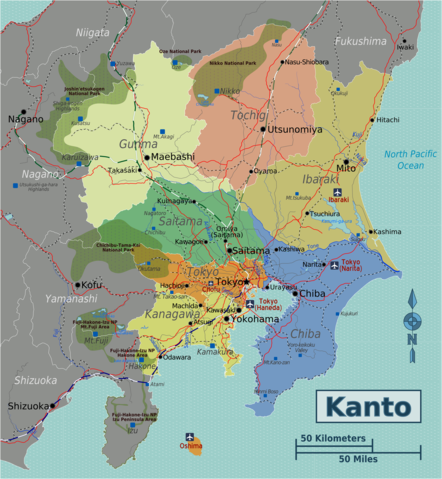
Maps of the Tohoku (left) and Kanto (right) regions, in eastern Honshu.
Tohoku map: By T.Kambayashi [CC BY-SA 3.0 ], via Wikimedia Commons
Kanto map: By T.Kambayashi [CC BY-SA 3.0 ], via Wikimedia Commons
Name Area(s) Period Price Reserved Seats Shinkansen
Tokyo Wide Pass Kanto 3 days ¥10,180 Yes Tohoku1, Joetsu2,
Hokuriku3
Tohoku Area Pass Kanto, Tohoku 5/14 days ¥19,350/
20,360*
Yes Tohoku, Yamagata,
Akita, Joetsu2, Hokuriku3
Nagano-Niigata Area Pass Kanto, Joetsu 5/14 days ¥17,310/
18,330*
Yes Tohoku1, Joetsu, Hokuriku4
East-South Hokkaido Pass Kanto, Tohoku,
Southern Hokkaido
6/14 days ¥26,900/
27,930*
Yes Tohoku, Yamagata, Akita,
Hokkaido, Joetsu2, Hokuriku3
Tohoku-South Hokkaido Pass Tohoku,
Southern Hokkaido
5/14 days ¥19,750/
20,790*
Yes Tohoku5, Yamagata,
Akita, Hokkaido
*Prices for pre-ordering the given pass outside of Japan vs. purchasing within Japan.
1Tohoku Shinkansen covered between Tokyo and Nasu-Shiobara stations.
2Joetsu Shinkansen covered between Tokyo and Echigo-Yuzawa stations (or Gala-Yuzawa during ski seasons).
3Hokuriku Shinkansen covered between Tokyo and Sakudaira stations.
4Hokuriku Shinkansen covered between Tokyo and Joetsu-Myoko stations.
5Tohoku Shinkansen covered between Shin-Shirakawa and Shin-Aomori stations.

The Tokyo Wide Pass is wider in scope than the name may imply.  In fact, it covers the entire Kanto Plain region, making it ideal for various day-trips from Tokyo.  (Fittingly, it was previously known as the Kanto Area Pass.)  It covers all JR lines in the region, including segments of the Tohoku, Joetsu, and Hokuriku Shinkansen lines.  It also covers a fair number of non-JR lines, including the Tokyo Monorail, Rinkai Line, Fujikyu Railway, Izukyu Railway, and JR/Tobu's limited express trains to Nikko and Kinugawa Onsen from Shinjuku (but not Tobu's station in Asakusa).  However, it is not valid on the Tokaido Shinkansen, which is owned by JR Central.  Furthermore, in order to use Hayabusa and Komachi services on the Tohoku Shinkansen, the limited express fees must be paid out-of-pocket.  (Not that it would do you much good anyway; those services only make the first three stops within the valid area.)  For its price, the Tokyo Wide Pass is not suitable just for transit in the immediate vicinity of Tokyo, but is a good value for various day-trips from Tokyo, especially those using one of the Shinkansen lines.

The Tohoku, and Nagano-Niigata area passes both cover the Kanto area in addition to other regions.  Unlike the Tokyo Wide Pass, they are valid for any 5 within a 14-day period, which starts when the pass is received by the user.  However, the Tohoku Area Pass is not valid on the Hokkaido Shinkansen, which is owned by JR Hokkaido.  Likewise, the Nagano-Niigata Area Pass is only valid on the Hokuriku Shinkansen up to Joetsu-Myoko; JR West owns the line from the west of that point.  These passes do not cover all of the non-JR lines as the Tokyo Wide Pass, but do cover a couple of non-JR lines in their respective regions, mainly those that connect to airports or isolated JR lines.  The Nagano-Niigata version pays off for a round-trip journey on the full covered length of the Joetsu or Hokuriku Shinkansen (normally ¥18,000-20,000 from Tokyo to Niigata or Joetsu-Myoko), and the Tohoku version is an even better for a round-trip journey on the Tohoku Shinkansen (¥35,000 from Tokyo to Shin-Aomori).

The South Hokkaido Pass covers the same areas as the Tohoku Area Pass in addition to the Hakodate and Sapporo areas on Hokkaido, including the Hokkaido Shinkansen.  It is also valid for an additional day within the same 14-day period.  Since a full round-trip ride on the Tohoku and Hokkaido Shinkansen from Tokyo costs over ¥44,000, this pass can be of terrific value for an excursion to Hokkaido.  While it is nearly as expensive as a 7-day Japan Rail Pass, the flexible 14-day period may be an advantage depending on your itinerary.

Edit 11 Sep 2018: On 5 January 2018, JR East and JR Hokkaido launched another pass together, the Tohoku-South Hokkaido Area Pass.  It is similar to the East-South Hokkaido pass, with the notable exception that it does not cover the Kanto region; its coverage starts northward from Fukushima prefecture.  As such, it is cheaper than the East-South Hokkaido pass, but includes one fewer day of flexible coverage (5 days out of 14, as opposed to 6).  If you're coming into the region by rail from Tokyo, it may not be the best bet, but if you're flying directly into the region via Sendai, Chitose, or other airports, this could save money over other passes.

More information:
Tokyo Wide Pass: (English)
JR East Pass (Tohoku Area): (English)
JR East Pass (Nagano/Niigata Area): (English)
East-South Hokkaido Pass: (English)
Tohoku-South Hokkaido Pass: (English)

JR Central
A map of the Chubu region, including the Hokuriku area in the northwest.
By Kambayashi [CC BY-SA 3.0 ], from Wikimedia Commons
Name Area(s) Period Price Reserved Seats Shinkansen
Mt. Fuji-Shizuoka Area
Tourist Pass Mini
Tokaido, Mt. Fuji 3 days ¥4,570/
5,080*
No None
Takayama-Hokuriku Area
Tourist Pass 
Chubu, Hokuriku 5 days ¥14,260/
15,280*
Yes (4 times)1 Hokuriku2
Alpine-Takayama-Matsumoto
Area Pass
Chubu 5 days ¥17,830/
18,850*
Yes (4 times) None
Ise-Kumano-Wakayama
Area Pass
Ise Peninsula 5 days ¥11,210/
12,220*
Yes (4 times)1 None
*Prices for pre-ordering the given pass outside of Japan vs. purchasing within Japan.
1Not valid for reserved seats on the Haruka limited express.
2Hokuriku Shinkansen covered between Toyama and Kanazawa stations.

The Mt. Fuji-Shizuoka Area Tourist Pass Mini covers regular trains and various buses around Mount Fuji, the Izu Peninsula, and Shizuoka Prefecture.  It does not cover the Tokaido Shinkansen, despite passing through the area.  It also does not cover transportation from any major cities, such as Tokyo or Nagoya.  So, you'll get the best value from it if you stay in the area for a few nights and visit two or all of the three areas mentioned above.

The Takayama-Hokuriku Area Tourist Pass covers trains from Nagoya to Toyama, Kanazawa to Osaka, and a brief section of the Hokuriku Shinkansen between Toyama and Kanazawa.  It also covers certain buses to Shirakawa-go, famous for its heritage farming villages.  However, it is not valid on the Tokaido Shinkansen.  It can make up its value with a full round-trip on the Wide View Hida (Nagoya-Toyama) and/or Thunderbird (Osaka-Kanazawa) limited express (each costing over ¥14,000 round-trip), so if used wisely, can be a good choice for an excursion into the region from Nagoya or Osaka

The Alpine-Takayama-Matsumoto Area Tourist Pass covers conventional trains in a loop between Nagoya, Matsumoto, Shinano-Omachi, Toyama, and Takayama.  This includes unlimited travel along the Tateyama Kurobe Alpine Route, a series of trams, buses, and cable-cars that cut through a section of the Japan Alps.  Famous sights along the Alpine Route include the Kurobe Dam and the Yuki-no-Otani, a canyon of snow which towers over part of the road from April to June.  The pass is very specific in the lines it is valid for, but it is still a great value for a round trip from Nagoya to the Alpine Route.

The Ise-Kumano-Wakayama Area Tourist Pass covers trains on a loop around the Kii Peninsula, including Nagoya and Osaka.  It also covers a few buses which can be used to reach inland areas.  However, it is not valid on the Tokaido Shinkansen (noticing a pattern here?).  Still, a round-trip ride to the southern end of the peninsula via the Wide View Nanki (from Nagoya) or Kuroshio (from Kyoto/Osaka) limited express can cost up to ¥15,000 or more, so this pass can be a great value if you go down far enough.

More information:
Mt. Fuji-Shizuoka Area Tourist Pass Mini: (English)
Takayama-Hokuriku Area Tourist Pass: (English)
Alpine-Takayama-Matsumoto Area Tourist Pass: (English)
Ise-Kumano-Wakayama Area Tourist Pass: (English)

JR West (Kansai/Hokuriku Regions)
A map of the Kansai region in central Honshu.
By T.Kambayashi (Image:Japan Kansai Map.svg) [CC BY-SA 3.0 ], via Wikimedia Commons
Name Area(s) Period Price Reserved Seats Shinkansen
Kansai Area Pass Kansai 1 day ¥2,300/
2,400*
No None
2 days ¥4,600/
4,800*
3 days ¥5,600/
5,800*
4 days ¥6,600/
6,800*
Kansai Wide Area Pass Kansai, Okayama 5 days ¥9,200/
10,200*
No Sanyo1
Hokuriku Area Pass Hokuriku 4 days ¥5,090/
5,600*
No Hokuriku2
Kansai Hokuriku Area Pass Kansai, Hokuriku 7 days ¥15,270/
16,290*
No Sanyo1, Hokuriku3
Hokuriku Arch Pass Tokyo, Hokuriku, Kansai 7 days ¥24,440/
25,460*
Yes4 Hokuriku
*Prices for pre-ordering the given pass outside of Japan vs. purchasing within Japan.
1Sanyo Shinkansen covered between Shin-Osaka and Okayama stations.
2Hokuriku Shinkansen covered between Kurobe-Unazuki-Onsen and Kanazawa stations.
3Hokuriku Shinkansen covered between Joetsu-Myoko and Kanazawa stations.
4Not valid for reserved seats on the Haruka limited express.

The Kansai Area Pass covers local and rapid JR trains in the Kansai area, covering Kyoto, Osaka, Nara, Kobe, et al., along with non-reserved seats on the Haruka limited express to/from Kansai International Airport.  However, it is not valid for the Shinkansen or any other limited express services.  It does not pay off just for transit within or between the main cities listed above, but is better for side trips to some of its more outlying areas, such as Himeji, Iga, or Hikone.  Starting from 1 October 2019, the Kansai Area Pass also includes 1-day passes for the Kyoto Subway lines and part of the Keihan network, hence the increased price.

The Kansai Wide Area Pass, on the other hand, not only covers a wider area than the Kansai Area Pass, but is valid on limited express trains and even the Sanyo Shinkansen (between Shin-Osaka and Okayama stations).  Unlike the JR Pass, it can be used on Nozomi and Mizuho express services.  However, it is not valid on the Tokaido Shinkansen to Kyoto, as it is owned by JR Central.  Additional areas covered include Okayama, Kinosaki Onsen, and the western Kii Peninsula.

The Hokuriku Area Pass covers the Hokuriku area along the Sea of Japan coast, including limited express trains and part of the Hokuriku Shinkansen.  However, since the Kayagaki express service does not have any non-reserved seating, it is not fully covered by the pass.  Similar to the Mt. Fuji-Shizuoka pass described above, the Hokuriku pass does not cover the urban Kansai area, so it's on your dime to get there.  If you are coming in from the Kansai area, you might be better off with the Kansai Hokuriku Area Pass, which is essentially a hybrid of the Kansai Wide and Hokuriku passes, and covers sections of the Sanyo and Hokuriku Shinkansen.

The Hokuriku Arch Pass combines coverage on the full length of the Hokuriku Shinkansen, limited-express trains between the Hokuriku and Kansai regions, access to Narita, Haneda, and Kansai airports, and more.  (The Tokaido and Sanyo Shinkansen are not covered.)  Going between Tokyo and Osaka this way takes 5-6 hours via the Hokuriku Shinkansen and Thunderbird limited express (and a normal round-trip fare of over ¥43,000!).  This is about twice as long as the Tokaido Shinkansen, but the Arch Pass is a few thousand yen cheaper than the JR Pass, and allows for stopovers at many interesting locations in the relatively-less-travelled Hokuriku area.

More information:
Kansai Area Pass: (English)
Kansai Wide Area Pass: (English)
Hokuriku Area Pass: (English)
Kansai-Hokuriku Area Pass: (English)
Hokuriku Arch Pass: (English)

JR West (Chugoku Region)
The Chugoku region, on the western end of Honshu.
By Marc Heiden [CC BY-SA 4.0 ], via Wikimedia Commons
Name Area(s) Period Price Reserved Seats Shinkansen
Kansai-Hiroshima Area Pass Kansai, Sanyo 5 days ¥13,700/
14,700*
No Sanyo1
Sanyo-San'in Area Pass Kansai, Sanyo,
San'in
7 days ¥19,400/
20,400*
Yes Sanyo
San'in-Okayama Area Pass Okayama, San'in 4 days ¥4,580/
5,390*
No None
Hiroshima-Yamaguchi Area Pass Western Sanyo 5 days ¥11,200/
12,200*
No Sanyo2
Okayama-Hiroshima-Yamaguchi Area Pass Central/Western Sanyo 5 days ¥13,700/
12,200*
No Sanyo3
Setouchi Area Pass Kansai, Sanyo,
Northern Shikoku
5 days ¥17,310/
18,330*
No Sanyo
Sanyo-San'in Northern Kyushu Pass Kansai, Sanyo,
San'in, Northern Kyushu
7 days ¥22,400/
23,420*
No Sanyo, Kyushu4
*Prices for pre-ordering the given pass outside of Japan vs. purchasing within Japan.
1Sanyo Shinkansen covered between Shin-Osaka and Hiroshima stations.
2Sanyo Shinkansen covered between Hiroshima and Hakata stations.
3Sanyo Shinkansen covered between Okayama and Hakata stations.
4Kyushu Shinkansen covered between Hakata and Kumamoto stations.

JR West also owns train lines in the Chugoku region, on the western end of Honshu.  Their passes for the area are self-explanatory, and most of them cover the Sanyo Shinkansen in part or in whole, including Nozomi and Mizuho services (but not the Tokaido Shinkansen to Kyoto).  In addition, the Sanyo-San'in and San'in-Okayama passes fully cover the Chizu Express, a third-sector line not covered by the Japan Rail Pass, that provides some of the fastest access to Tottori in the San'in region.  Some JR-run limited express services use this line, but the JR Pass would require a fee for the non-JR section.

The Setouchi Area Pass covers trains in the area surrounding the Seto Inland Sea, namely the Kansai, Sanyo, and northern Shikoku regions.  Coverage includes the entire length of the Sanyo Shinkansen, plus a few buses and ferries between the islands of Honshu and Shikoku.

Edit 3 July 2017: JR West has just launched a new area pass, the Sanyo-San'in Northern Kyushu Pass.  As per the name, this covers JR trains in the Kansai and Chugoku regions, plus the northern half of Kyushu, including the entire length of the Sanyo Shinkansen, and the Kyushu Shinkansen as far as Kumamoto.  It also covers the Chizu Express to Tottori, and local JR buses in Kyoto, Hiroshima, and Yamaguchi.

More information:
Kansai-Hiroshima Area Pass: (English)
Sanyo-San'in Area Pass: (English)
San'in-Okayama Area Pass: (English)
Hiroshima-Yamaguchi Area Pass: (English)
Okayama-Hiroshima-Yamaguchi Area Pass: (English)
Setouchi Area Pass: (English)
Sanyo-San'in Northern Kyushu Pass: (English)

JR Shikoku
A map of the islands of Shikoku.
By Marc Heiden [CC BY-SA 4.0 ], via Wikimedia Commons
Name Area(s) Period Price Reserved Seats Shinkansen
All Shikoku Rail Pass Kansai, Sanyo 3 days ¥9,000/
9,500*
Yes None
4 days ¥10,000/
10,500*
5 days ¥11,000/
11,500*
7 days ¥13,000/
13,500*
Shikoku Free Pass Shikoku 3 days ¥16,440 Yes None
*Prices for pre-ordering the given pass outside of Japan vs. purchasing within Japan.

Both the All Shikoku Rail Pass and the Shikoku Free Pass cover JR lines on the island of Shikoku.  The All Shikoku Rail Pass is sold in periods of 3, 4, 5, or 7 consecutive days.  It is also valid on multiple non-JR lines on Shikoku, including the Kotoden lines around Takamatsu, and the Iyotetsu lines around Matsuyama.

The Shikoku Free Pass is far more expensive, and is not valid on almost all non-JR lines, but is available for sale to Japanese citizens as well as foreign visitors.  Also, on the month of your birthday, you can buy the Birthday Kippu pass, which is the same as the Shikoku Free Pass, but costs only ¥10,280!  Still, if you're coming in from outside of the country, you're better off sticking to the All Shikoku Rail Pass.

More information:
All Shikoku Rail Pass: (English)
Shikoku Free Pass: (Japanese)

JR Kyushu
A map of the islands of Kyushu.
By T.kambayashi (Image:Japan Kyushu Map.svg) [CC BY-SA 3.0 ], via Wikimedia Commons
Name Area(s) Period Price Reserved Seats Shinkansen
All Kyushu Area Pass Kyushu 3 days ¥15,280 Yes (10 times) Kyushu
5 days ¥18,330 Yes (16 times)
Northern Kyushu Area Pass Northern Kyushu 3 days ¥8,660 Yes (10 times) Kyushu1
5 days ¥10,190 Yes (16 times)
Southern Kyushu Area Pass Southern Kyushu 3 days ¥7,500 Yes (10 times) Kyushu2
Fukuoka Wide Pass Fukuoka Prefecture 2 days ¥3,060 No None
1Kyushu Shinkansen covered between Hakata and Kumamoto stations.
2Kyushu Shinkansen covered between Kumamoto and Kagoshima-Chuo stations.

The All Kyushu Area Pass covers all JR lines on the island of Kyushu, including the Kyushu Shinkansen.  It is also valid on the Shinkansen's Mizuho express services, unlike the JR Pass.  Pass users can make free seat reservations up to 10 (for 3-day passes) or 16 (for 5-day passes) times.  The pass does not cover the Sanyo Shinkansen, which runs through the Fukuoka and Kitakyushu areas, as it is owned by JR West.

JR Kyushu also sells varieties of the pass specific to the northern and southern halves of the island, with the dividing line roughly drawn from Kumamoto in the west to Oita in the east.  If you wish to explore Kyushu using one of these passes, be sure to review your itinerary so you can buy the pass that's best for you.  Come to think of it, that's sound advice to heed for all of the other passes I've described in this article!

Edit 11 Sep 2018: on 1 September 2018, JR Kyushu introduced a Fukuoka Wide version of the Kyushu Rail Pass, which covers conventional JR lines in Fukuoka prefecture, including the cities of Fukuoka and Kitakyushu.  This also includes non-reserved seats on limited express trains within the covered area.  It does not cover seat reservations, any seats on the Sanyo or Kyushu Shinkansen, or other networks like Nishitetsu or the Fukuoka subway.

More information:
Kyushu Rail Pass: (English)
Fukuoka Wide Pass: (English)