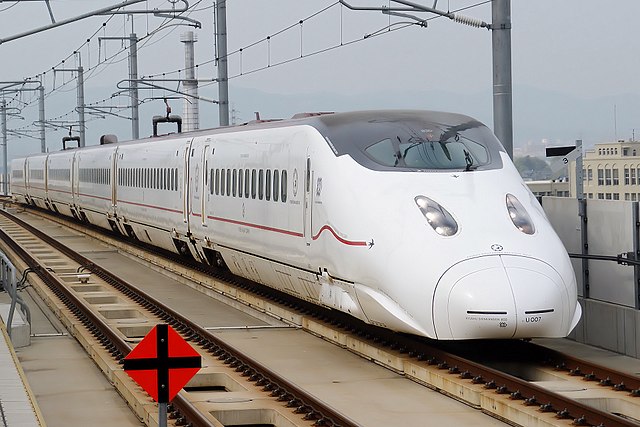
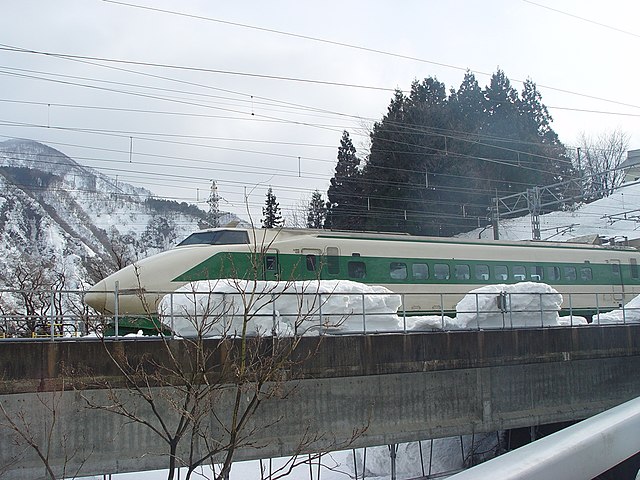
COVID-19 Coronavirus Notice

COVID-19 Coronavirus Notice

Updated 2 July 2020

If you are reading this message, please be aware of travel restrictions in place as part of measures to contain the spread of the COVID-19 "Coronavirus" and its symptoms. Japanese authorities are refusing entry to individuals from, or who have been to, a list of over 100 countries (More information). All other visitors must apply for a visa, and undergo a quarantine upon entering the country. Within the Japan, there are no longer any travel restrictions, and most public attractions have re-opened with precautions for sanitation and social distancing. In short, travel to Japan is not recommended at this time, until the situation normalises. I will not be editing my individual articles to reflect this, but again, please keep this in mind when reading them.
Showing posts with label Shinkansen. Show all posts

Sunday, May 14, 2017

SCMaglev and Railway Park

This article is based on a visit made on Thursday, 17 November 2016.

Edit 7 October 2019: Updated prices to reflect the increase in Japan's national sales tax.

Previously on Sekai Ichi, I had wrapped up my overnight stay at the Fuji Five Lakes.  As the morning rose, and I finally caught a glimpse of the elusive Mount Fuji, I embarked on the journey to my next base of operations, Osaka.  But on the way, I made an afternoon stopover at Nagoya to visit the SCMaglev and Railway Park (リニア・鉄道館, Rinia Tetsudōkan), a train museum managed by JR Central, which also owns the Tokaido Shinkansen.  This museum was opened in 2011, replacing an open-air train museum also run by JR Central, the Sakuma Rail Park, which stood east of Nagoya in Shizuoka prefecture.

The entrance hall of the museum is dominated by three locomotives that have set world speed records on test runs.  On the left is the JNR Class C62, a steam engine which reached 129 km/h (80 mph) in 1954.  Next to that is the 300X prototype bullet train, which reached 443 km/h (275 mph) in 1996, a still-standing record for electric trains.  And on the right is the MLX01, a prototype maglev-powered train that set a record of 581 km/h (361 mph) in 2003, only for it to be broken by future maglev prototypes, which we'll see more of later.

Beyond that is the vast main hall, where all manner of production train cars are on display for guests to look at and enter.  Shinkansen models are on the left, and other electric trains are on the right.  As always, click here it in full size.

Did you know that some bullet trains used to have restaurant cars?  When the Sanyo Shinkansen was completed in 1975, and trains started running continuous journeys between Tokyo and Fukuoka, dining cars like these were added to accommodate passengers on those longer trips.  They were used until the mid-1990s, when faster trains had become available, and having to serve full meals was no longer necessary.

There even used to be double-decker cars on the Tokaido and Sanyo Shinkansen, too!  They were used on Series 100 trains, which ran from 1985 to 2012.  The upper deck of this car included a dining area.  Nowadays, those cars have been retired from the Tokaido and Sanyo lines, but double-decker cars are still used on the Joetsu Shinkansen, albeit only for extra seating capacity.

This is one of the "Doctor Yellow" (ドクターイエロー, Dokutā Ierō) trains which are used for conducting maintenance work on Shinkansen lines.  While still operating at the same high speeds as passenger trains, they have special equipment to monitor the condition of the rails below and the power lines above.

Exhibits along the left-side wall provide further insights into the workings of the Shinkansen, including its safety mechanisms which automatically slow down trains to keep them from colliding with other trains ahead, and shut them down completely when an earthquake is detected.  It's systems like these which have maintained the network's impressive safety record.  In over 50 years of the Shinkansen's history, there have only been two derailment incidents, and no fatalities due to accidents.

There's more to this museum than just the Shinkansen.  Various electric, diesel, and steam train cars are preserved here as well.  This is the lead car of a 381-series train, introduced in the 1970s for the "Shinano" limited-express between Nagoya and Nagano.  The Shinano still runs to this day, but with newer cars.

When Japan started using electric power for trains in the 1920s, they imported train cars from the USA, the UK, and other countries before they were able to build their own.  This model was originally built by the American company General Electric.

Even more trains are lined up in the back, including this rather odd-looking one.  This is called a Structure Gauging Train.  What are all those spikes for, you may ask?  Well, they are for measuring the distance between the train's hull and tunnels or other obstructions, to make sure that trains will pass by them safely.

Other exhibits are situated in rooms lining the main hall, including one dedicated to the maglev (magnetic levitation), or "linear motor" (リニアモーター, rinia mōtā), line that JR Central is building between Tokyo, Nagoya, and Osaka.  There are displays of how the maglev system works, miniatures of the different test cars used over the years, including the latest L0-series model (shown on the bottom), and even a small theatre that simulates the experience of riding one of these trains.

Another big draw to the museum is its train-driving simulators.  There are regular train-driving simulators; admission for these costs ¥100, and tickets are available from a vending machine.  Admission on the Shinkansen driving simulator and train crew simulator is handled by lottery.  You are given numbered tickets for both along with your museum ticket, and you can drop them into the lottery boxes in the main hall before any of the multiple drawings per day.  If you are selected, pay an additional ¥500 and you can use the simulator at the allotted time.  If you don't get in to those, you can always try out the conventional train-driving simulator, which I did.  It was tricky; I overshot one of my stops, but otherwise I did fine.

Finally, there is the "Greatest Railway Diorama Room"  (鉄道ジオラマ, Tetsudō Jiorama), a large model railway re-creating the Tokaido Shinkansen and landmarks from cities along the line, in particular Tokyo (pictured), Nagoya, Kyoto, and Osaka.  I believe that bridge in the left background is supposed to be part of the Yamanashi Test Track, where test runs of the maglev trains are being conducted.

The lighting in the diorama room cycles from day to night at regular intervals.  Here, the "sun" sets on famous locales in the Kansai region.  In the lower left is Mount Yoshino, where 30,000 cherry trees bloom in intervals from late March to early May.  In the centre is the main hall of Todai-ji temple in Nara, which houses a giant bronze Buddha statue.  And in the far right is the main hall of Kiyomizu-dera temple in Kyoto, standing atop its famous wooden scaffolding and surrounded by orange maple trees.  I would soon see the real thing, but that's a story for another day...!


Hours: Open from 10:00 AM to 5:30 PM.  Admission ends 30 minutes before closing time.  Closed on Tuesdays, and between 28 December and 1 January.

Costs: ¥1,000.  The Shinkansen driving and train crew simulators cost ¥500 each per turn, if selected.  The regular driving simulator costs ¥100 per turn.  Audio guides cost ¥500 per visit to rent, and are available in the following languages: Japanese, English, Chinese, Korean, French, German, Spanish, and Portuguese.

Address: 3-2-2 Kinjōfutō, Minato-ku, Nagoya-shi, Aichi-ken 〒455-0848

Access: From Nagoya Station, take the Aonami (AN) line to Kinjofuto (AN11, 25 minutes, ¥360).

Directions: The museum is just across the street from the exit to Kinjofuto Station.

Website: (English) (Japanese)

Saturday, March 18, 2017

Know Your Trains: Hokkaido Shinkansen

The lead car of a H5-series Shinkansen train approaching Omiya Station.
Rsa [GFDL or CC-BY-SA-3.0], from Wikimedia Commons
The Hokkaido Shinkansen (北海道新幹線, Hokkaidō Shinkansen) is a high-speed rail line linking the islands of Honshu and Hokkaido.  It runs from Aomori, the terminus of the Tohoku Shinkansen, through the undersea Seikan Tunnel, to its current terminus near Hakodate.  Owned and operated by JR Hokkaido, the line is the newest member of the Shinkansen family, opening in March 2016.  Combined with through services on the Tohoku Shinkansen, the two lines link Tokyo and Hakodate in less than four and a half hours.  Its top speed is 260 kilometers per hour (160 miles per hour), except for a limit of 140 km/h (85 mph) inside the Seikan Tunnel.

A map of the Hokkaido Shinkansen, including segments currently under construction.
Two types of services run on the Hokkaido Shinkansen, "Hayate" and "Hayabusa".  Both are through-services from the Tohoku Shinkansen.  The vast majority of services are Hayabusa, with Hayate services running mainly during the early morning or late evening.

Name Start Station End Station(s) Time Max. Frequency*
Hayate Shin-Aomori Shin-Hakodate-Hokuto 65 minutes 2 per day
Morioka (Tohoku) 2 hours 10 minutes
Hayabusa Shin-Aomori Shin-Hakodate-Hokuto 60 minutes 1 per hour
Tokyo (Tohoku) 4 hours 30 minutes
* Departure frequency is based on March 2017 schedules and are subject to change.

All Hayate and half of all Hayabusa services stop at every station, while the other Hayabusa trains run directly between the terminals in Aomori and Hakodate.  At the time of this post, the Hokkaido Shinkansen only includes four stops.  An extension to Sapporo is under construction, and is scheduled to open in 2030-2031.  Much of the line, including the planned extension, goes through various tunnels, so there may not be much to see from your window.

Name (English) Name (Japanese) Prefecture Hayate Hayabusa
Shin-Aomori 新青森 Aomori X X
Okutsugaru-Imabetsu 奥津軽いまべつ X O
Kikonai 木古内 Hokkaido X O
Shin-Hakodate-Hokuto 新函館北斗 X X
Shin-Yakumo* 新八雲
Under construction
Scheduled to open
in 2030-31
Oshamambe 長万部
Kutchan 倶知安
Shin-Otaru* 新小樽
Sapporo 札幌
Legend
X: All trains stop at this station.
O: Some trains stop at this station.
I: No trains stop at this station.
* Shin-Yakumo and Shin-Otaru are tentative names for stations to be newly built.

Notable stops
  • Shin-Aomori: Home of the Nebuta summer festival.
  • Okutsugaru-Imabetsu: The last stop on Honshu, before the Seikan Tunnel.
  • Kikonai: The first stop on Hokkaido.
  • Shin-Hakodate-Hokuto: One of Japan's first ports to open to foreign trade.
A GranClass car on a H5-series train.  The blue carpet in this car represents Hokkaido's seas and lakes.
くるみ1211 (Kurumi 1211) [CC BY-SA 4.0], from Wikimedia Commons
Hokkaido Shinkansen services use the new H5-series trains, a derivative of the E5-series used solely on the Tohoku Shinkansen.  The H5 is largely similar to the E5, except for a few mechanical modifications designed for the harsher Hokkaido winters, and colour and design changes meant to evoke the nature of the island.  Neither of the two services have any non-reserved cars, so seat reservations are mandatory.  If all seats are booked, standing-room tickets may be available.  Both the Hayate and Hayabusa also include one Green Car and one GranClass car.

Service Total Cars Non-Reserved Cars Reserved Cars Green Cars GranClass Cars
Hayate 100 8 (Cars #1-8) 1 (Car #9) 1 (Car #10)
Hayabusa 10 0 8 (Cars #1-8) 1 (Car #9) 1 (Car #10)

Tips
  • All seats on Hayate and Hayabusa services are reserved.  Seat reservations are free when using a Japan Rail Pass or JR East area pass.  In the event that all seats on a train are booked, it may be possible to buy a standing-room ticket.
  • Unlike on the Tokaido, Sanyo, and Kyushu lines, the Japan Rail Pass is valid for ALL services on the Hokkaido Shinkansen.  In addition, the JR East South Hokkaido Area Pass (English) also covers the full line from Tokyo to Shin-Hakodate-Hokuto.
  • The JR Hokkaido Area Pass, on the other hand, does not cover any of the Hokkaido Shinkansen.  Only regular and limited-express trains are covered by it.
  • Shin-Hakodate-Hokuto station is located in the suburb of Hokuto, which is somewhat far away from the more centrally-located Hakodate Station.  The two stations are connected by the Hakodate Line.  A rapid service called the Hakodate Liner travels between them in 20 minutes, costs ¥360, and is timed to arrive and depart with Shinkansen services.
  • The Japan Rail Pass and Hokkaido Rail Pass do not cover the South Hokkaido Railway, a regular line that was transferred to a non-JR company after the opening of the Hokkaido Shinkansen (see the Trivia section below).
  • For those using the Seishun 18 Ticket (more information), which normally does not allow free use of the Shinkansen, it is possible to purchase a supplement ticket, called the "Seishun 18 Kippu Hokkaido Shinkansen Ticket".  It costs ¥2,300, and allows one-way use of the Hokkaido Shinkansen between Oku-Tsugaru-Imabetsu and Kikonai, and the South Hokkaido Railway between Kikonai and Hakodate.
Trivia
  • The Hokkaido Shinkansen travels through the Seikan Tunnel, an undersea tunnel between the islands of Honshu and Hokkaido.  Since the Shinkansen shares this section with regular freight trains, its speed limit is lowered to 140 km/h (85 mph) within the tunnel.  This is to prevent freight trains from being knocked off the rails by the shockwave of fast-moving Shinkansen trains.  JR Hokkaido is developing solutions to allow trains to run faster within the tunnel, such as "Train on Train", which involves loading cars onto transporter wagons designed to withstand higher speeds.
  • There used to be two train stations within the Seikan Tunnel.  Tappi-Kaitei, on the Honshu side, and Yoshioka-Kaitei, on the Hokkaido side, opened in 1988 along with the tunnel.  These stations closed in 2013, while the Hokkaido Shinkansen was under construction.  The line which served these stations, the Kaikyo Line, is today only used by freight trains.
  • Shin-Hakodate-Hokuto Station, formerly known as Oshima-Ono Station, was renamed and renovated in 2016 to coincide with the opening of the Hokkaido Shinkansen.  A statue of Kenshiro, the main character from the manga and anime Fist of the North Star (or "Hokuto no Ken" in Japanese), was added in front of the station.  The new name of the station comes from its location in the town of Hokuto (literally "north star" in English), not from the show.  More information on this development has been posted on the website Rocket News 24.
  • When the Hokkaido Shinkansen was first opened, a section of JR's conventional Esashi Line was sold to a new semi-private company.  The section between Kikonai and Goryokaku was transferred to the new South Hokkaido Railway (道南いさりび鉄道, Dōnan Isaribi Tetsudō).
A full-size mockup of a "Train on Train".
100yen [GFDL or CC BY-SA 3.0], from Wikimedia Commons

Sunday, March 12, 2017

Know Your Trains: Kyushu Shinkansen

An 800-series "Tsubame" train approaching Kurume Station.
By JKT-c [GFDL or CC BY 3.0], from Wikimedia Commons
The Kyushu Shinkansen (九州新幹線, Kyūshū Shinkansen) is a high-speed rail line running along the west coast of the island of Kyushu, between the cities of Fukuoka (at Hakata Station) and Kagoshima (at Kagoshima-Chuo Station).  Owned and operated by JR Kyushu, the line opened partially in 2004, and fully in 2011, connecting with the Sanyo Shinkansen to provide through-service all the way to Tokyo.  Its top speed is 260 kilometers per hour, or 160 miles per hour.

A map of the Kyushu Shinkansen and its stops, including sections currently under construction.
Three services run on the Kyushu Shinkansen: the local "Tsubame", the semi-express "Sakura", and the express "Mizuho".  The vast majority of services are Sakura, with the other two operating mainly during the morning and evening rush hours.  Mizuho and most Sakura services continue on from Hakata on to the Sanyo Shinkansen, terminating at Shin-Osaka Station.  With only one transfer, it is possible to travel from Tokyo all the way to Kagoshima in 7 (by Nozomi and Mizuho) to 8 (by Hikari and Sakura) hours.

Name Colour* Start Station End Station Time** Max. Frequency***
Tsubame White Hakata Kagoshima-Chuo 2 hours 3-4 per day
Sakura Pink Shin-Osaka (Sanyo)
Hakata
Kagoshima-Chuo 80-90 minutes 1-2 per hour
Mizuho Orange Shin-Osaka (Sanyo) Kagoshima-Chuo 80 minutes 6 per day
* The colour associated with each particular service on signboards, etc.
** Approximate time between Hakata and Kagoshima-Chuo stations.
*** Departure frequency is based on March 2017 schedules and are subject to change.

When the Kyushu Shinkansen first opened in 2004, it only ran between Shin-Yatsushiro and Kagoshima-Chuo stations.  In 2011, it was extended all the way north to Hakata Station.

Name (English) Name (Japanese) Prefecture Tsubame Sakura Mizuho
Hakata 博多 Fukuoka X X X
Shin-Tosu 新鳥栖 Saga X O I
Kurume 久留米 Fukuoka X O I
Chikugo-Funagoya 筑後船小屋 X I I
Shin-Omuta 新大牟田 X I I
Shin-Tamana 新玉名 Kumamoto X I I
Kumamoto 熊本 X X X
Shin-Yatsushiro 新八代 X O I
Shin-Minamata 新水俣 X O I
Izumi 出水 Kagoshima X O I
Sendai 川内 X X I
Kagoshima-Chuo 鹿児島中央 X X X
Legend
X: All trains stop at this station.
O: Some trains stop at this station.
I: No trains stop at this station.

Notable stops
  • Hakata: The main station in Fukuoka, the largest city in Kyushu.
  • Kumamoto: A castle town struck by earthquakes in 2016.
  • Shin-Minamata: A town struck by a mercury poisoning disaster in the 1950s, now a model for environmental recovery.
  • Kagoshima-Chuo: The southernmost city of Japan, with an active volcano in its bay.
A branch line to Nagasaki is currently under construction.  An isolated section of the line, from Nagasaki to Takeo-Onsen, is scheduled to open in 2023/24.  A connection to the trunk line at Shin-Tosu has been put on hold, however, in favour of simply using shuttle services on the existing narrow-gauge tracks.  When the first section opens, connections between Shin-Tosu and Takeo-Onsen will be provided by a relay service.  The table below shows what the Nagasaki branch route is planned to look like.

Name (English) Name (Japanese) Prefecture Tsubame Sakura Mizuho
Hakata 博多 Fukuoka X X X
Shin-Tosu 新鳥栖 Saga
Construction on hold
Saga 佐賀
Takeo-Onsen 武雄温泉 Under construction
Scheduled to open 2023/24
Ureshino-Onsen* 嬉野温泉
Shin-Omura* 新大村 Nagasaki
Isahaya 諫早
Nagasaki 長崎
*Tentative names for stations to be newly constructed.

The interior of an 800-series reserved car, with wider seats making up for the lack of a Green Car.
By TTTNIS [CC0], from Wikimedia Commons
Two kinds of train sets are used on the Kyushu Shinkansen: the 8-car N700-series, also used on the Tokaido and Sanyo Shinkansen, and the 6-car 800-series, which is exclusively used on the Kyushu Shinkansen.  Green Cars on both of these trains are either limited or non-existent, so to make up for this, ordinary reserved seats (and non-reserved seats on 6-car sets) are arranged in a 2+2 layout, making them wider and almost as comfortable as Green Car seats.

Service Total Cars Non-Reserved Cars Reserved Cars Green Cars
Tsubame 8 3 (Cars #1-3) 4½ (Cars #4-8) ½ (Car #6)
6 3 (Cars #1-3) 3 (Cars #4-6) 0
Sakura 8 3 (Cars #1-3) 4½ (Cars #4-8) ½ (Car #6)
6 3 (Cars #1-3) 3 (Cars #4-6) 0
Mizuho 8 3 (Cars #1-3) 4½ (Cars #4-8) ½ (Car #6)

Tips
  • Mizuho services are NOT covered by the Japan Rail Pass. Even if you have a JR Pass active, if you take one of these trains, you must pay the full fare out of pocket. On the Sanyo and Kyushu lines, services are marked by different colours on signboards. If you're using a JR Pass, beware of orange text/backgrounds -- these denote Mizuho trains!
  • In addition to the Japan Rail Pass, the JR Kyushu Area Pass covers all of the Kyushu Shinkansen.  Notably, it also covers Mizuho services, where the nationwide JR Pass does not.  However, it does not cover Green Car fees, and the number of seat reservations that can be made with each pass are limited.  JR Kyushu also sells versions of the pass covering only the north or south of Kyushu, which also cover the Kyushu Shinkansen to the north or south of Kumamoto Station, respectively.  More information: (English)
  • Do not confuse Sendai Station on the Kyushu Shinkansen with the Sendai Station on the Tohoku Shinkansen.  The former (in Kyushu) is written as "川内" in Japanese, the latter (in Tohoku) as "仙台".
  • The Japan Rail Pass and Kyushu Rail Pass do not cover the Hisatsu Orange Railway, a regular line that was transferred to a non-JR company after the opening of the Kyushu Shinkansen (see the Trivia section below).
Trivia
  • The name "Tsubame" (つばめ) means "swallow", as in the bird, in English.  It was previously used for multiple trains: one from Tokyo to Kobe, one from Tokyo to Osaka, one from Osaka to Fukuoka, one from Fukuoka to Kagoshima, and finally the "Relay Tsubame", a limited express from 2004 to 2011 which filled in the gap between the Sanyo and southern Kyushu Shinkansen.
  • The name "Sakura" (さくら) means "cherry blossom" in English.  It was previously used for an overnight limited express service Tokyo and Nagasaki.  It operated from 1959 to 2005.
  • The name "Mizuho" (みずほ) means "harvest", or literally "abundant rice" in English.  It was previously used for an overnight limited express service between Tokyo and Kumamoto.  It operated from 1961 to 1994.
  • When the southern leg of the Kyushu Shinkansen was completed in 2004, a section of JR's conventional Kagoshima Main Line that ran parallel to the Shinkansen was sold to a new semi-public company (co-owned by private companies and local prefecture governments).  The section between Yatsushiro, in Kumamoto prefecture, and Sendai, in Kagoshima prefecture, was transferred to the new Hisatsu Orange Railway.
  • JR Kyushu's original plan for the Nagasaki branch line was to provide nonstop service with "Gauge Change Trains", capable of running on both regular and Shinkansen tracks.  Due to cost and safety issues which arose during testing, in June 2017, they announced that they were cancelling plans to use Gauge Change Trains.  More information: (Japanese)

Monday, March 6, 2017

Know your Trains: Hokuriku Shinkansen

Update 12 August 2018: Updated with new maps.

A W7-series Hakutaka train at Nagano Station.
Taken on Wednesday, 16 May 2018.
The Hokuriku Shinkansen (北陸新幹線) is a high-speed train line running from Tokyo to Kanazawa, in the Hokuriku region of north-central Japan.  It was originally known as the Nagano Shinkansen, as it opened between Takasaki and Nagano in 1997, in preparation for the Winter Olympics in Nagano the following year.  In March 2015, the line was extended to Kanazawa and renamed to reflect the Hokuriku (北陸) region it now served.  Its top speed is 260 kilometers per hour, or 160 miles per hour.

There are four services on the Hokuriku Shinkansen.  Two of them, the express "Kayagaki" and semi-express "Hakutaka", run the full length of the line.  Of the other two full-stop services, the "Asama" runs between Tokyo and Nagano, and the "Tsurugi" only goes between Toyama and Kanazawa.

Name Colour* Start Station End Station(s) Time** Max. Frequency***
Asama VioletTokyo Nagano 1 hour 50 minutes 1 per hour
Tsurugi Blue Toyama Kanazawa23 minutes 1 per hour
Hakutaka RedTokyo Kanazawa 3 hours 1-2 per hour
Kayagaki Yellow TokyoKanazawa 2 hours 30 minutes 1 per hour
* The colour associated with each particular service on signboards, etc.  Some stations use violet for all Hokuriku Shinkansen services.
** Approximate time between designated start and end stations.
*** Departure frequency is based on March 2017 schedules and are subject to change.

A map of the Hokuriku Shinkansen and its stops, including sections currently under construction.
In its current state, the Hokuriku Shinkansen cuts northwest through the Japan Alps, and then runs west along the coast of the Sea of Japan.  Despite the Nagano-Kanazawa section only having been opened in 2015, further extensions are planned for the line as well.  Phase 3 will extend the line through Fukui to Tsuruga, and is scheduled to open in 2022/23.  Beyond that, the line will eventually be brought down to Kyoto and Shin-Osaka, but construction is not supposed to start until 2030, and may take 15 years to finish.

Name (English) Name (Japanese) Prefecture Asama Tsurugi Hakutaka Kayagaki
Tokyo 東京 Tokyo X I X X
Ueno 上野 X I X X
Omiya 大宮 Saitama X I X X
Kumagaya 熊谷 X I I I
Honjo-Waseda 本庄早稲田 X I I I
Takasaki 高崎 Gunma X I X I
Annaka-Haruna 安中榛名 X I I I
Karuizawa 軽井沢 Nagano X I O I
Sakudaira 佐久平 X I O I
Ueda 上田 X I O I
Nagano 長野 X I X X
Iiyama 飯山 I I O I
Joetsu-Myoko 上越妙高 Niigata I I X I
Itogawa 糸魚川 I I X I
Kurobe-Unazuki-Onsen 黒部宇奈月温泉 Toyama I I X I
Toyama 富山 I X X X
Shin-Takaoka 新高岡 I X X I
Kanazawa 金沢 Ishikawa I X X X
Komatsu 小松 Ishikawa
Under construction
Scheduled to open 2022/23
Kaga-Onsen 加賀温泉
Awara-Onsen 芦原温泉 Fukui
Fukui 福井
Nan'etsu* 南越
Tsuruga 敦賀
Legend
X: All trains stop at this station.
O: Some trains stop at this station.
I: No trains stop at this station.
*Tentative name for stations to be newly created

Notable stops
  • Tokyo/Ueno: The largest city in Japan and the world.
  • Omiya: The capital city of Saitama Prefecture, and home to a popular railway museum.
  • Takasaki: Where the Joetsu Shinkansen branches off.
  • Karuizawa: A mountain resort town with upscale shopping and beautiful natural sites.
  • Nagano: Site of the 1998 Winter Olympics.
  • Joetsu-Myoko: Where JR East's coverage area ends and JR West's begins.
  • Kurobe-Unazuki Onsen: Transfer point for the scenic Kurobe Gorge Railway.
  • Toyama: A transit hub for visiting Takayama and the Tateyama-Kurobe Alpine Route.
  • Kanazawa: A historically-preserved city, famous for the Kenroku-en garden.
All four Hokuriku Shinkansen services use the new E7-series (also designated as W7) trains with 12 cars.  The front car of these trains (facing Kanazawa) is a GranClass car.  All seats on these trains, even in the ordinary sections, have their own electrical outlets, a first for the Shinkansen.  However, on Tsurugi services, cars #8, 9, 10, and 12 are not used for passenger seating.  Furthermore, some Asama services use older E2-series trains with 8 cars, instead of the more modern E7s.

Service Total Cars Non-Reserved Cars Reserved Cars Green Cars GranClass Cars
Asama 12 5 (Cars #1-5) 5 (Cars #6-10) 1 (Car #11) 1 (Car #12)
8 4 (Cars #1-4) 3 (Cars #5-6, 8) 1 (Car #7) 0
Tsurugi 12* 4 (Cars #1-4) 3 (Cars #5-7) 1 (Car #11) 0
Hakutaka 12 4 (Cars #1-4) 6 (Cars #5-10) 1 (Car #11) 1 (Car #12)
Kayagaki 12 0 10 (Cars #1-10) 1 (Car #11) 1 (Car #12)
*Cars #8, 9, 10, and 12 on Tsurugi trains do not carry passengers.

Tips
  • The Kayagaki service does not include any non-reserved cars, so a ticket reservation is required to ride it.  In the event that all seats are booked, standing-room tickets may be available.
  • In addition to the JR Pass, several regional passes cover part or all of the Hokuriku Shinkansen.  Since the Kayagaki service does not offer non-reserved seating, it is not fully covered by passes which do not cover seat reservations, such as the Hokuriku Area Pass.  In this case, the pass will only cover the base fare, and you must pay for the supplemental fees yourself.
  • The Japan Rail Pass does not cover the cost for upgrading to GranClass, nor do the JR East area passes.  If you wish to do so, they will only cover the base fare; you must pay for the limited express and GranClass upgrade fees out-of-pocket, even if using a Green Car JR Pass.
  • If departing from, or arriving at, Tokyo, you may want to consider using Ueno Station instead of the eponymous Tokyo Station.  Ueno serves some of the same JR lines as Tokyo  (JR Yamanote (JY), Keihin-Tohoku (JK), Takasaki/Utsunomiya (JU), Joban (JJ)), but also serves the Tokyo Metro Ginza (G) and Hibiya (H) lines, and is somewhat smaller and more manageable.  The adjacent Keisei-Ueno Station also provides faster access to Narita Airport, via the Skyliner limited express.
  • Until the Hokuriku Shinkansen is fully extended to Kyoto, the Hokuriku and Kansai regions are connected by the Thunderbird limited-express service.  It makes the journey from Kanazawa, the current terminal of the Hokuriku Shinkansen, to Kyoto, Shin-Osaka, and Osaka stations in 2½ to 3 hours.
  • The Japan Rail Pass, and other JR passes, do not cover any of the conventional lines that were transferred to other companies after the opening/extension of the Hokuriku Shinkansen (see below).  However, there are exceptions in which the pass may be used on these lines, but only to access other JR lines.  Pass holders may only get on or off at the specified stations.  They are as follows:
    • The Ainokaze Toyama Line, between Toyama and Takaoka Stations, for transferring to the JR Johana and Himi lines.  Note that the former is also accessible from Shin-Takaoka Station, a stop on the Hokuriku Shinkansen.
    • The IR Ishikawa Line, between Kanazawa and Tsubata Stations, for transferring to the JR Nanao Line.
Trivia
  • The Asama (あさま) is named after Mount Asama (浅間山, Asama-yama), an active volcano near Karuizawa, a stop on the line.  Its peak is 2,568 metres (8,425 feet) above sea level, and its latest eruption was in February 2009, which sent ash as far away as Tokyo.  The name "Asama" was used for a limited-express service between Tokyo and Nagano, which operated from 1966 to 1997, when the Nagano Shinkansen (as it was then called) opened.
  • The Tsurugi (つるぎ) is named after Mount Tsurugi (剱岳, Tsurugi-dake), the tallest peak of the Hida Mountains in Toyama Prefecture.  It stands at 2,999 metres (9,839 feet) above sea level.  The name "Tsurugi", which is a word for "sword", was also used for a sleeping-car train service between Kanazawa and Nagaoka, which operated from 1961 to 1994.
  • The name "Hakutaka" (はくたか) means "white hawk", and was used for a limited-express service on the private Hokuhoku line between Naoetsu and Echigo-Yuzawa, which operated from 1997 to 2015, when the Hokuriku Shinkansen was first extended.  It ran at a maximum speed of 160 km/h (100 mph), making it the fastest non-Shinkansen train in Japan (since matched by the Keisei Skyliner).  Before that, it was the name of a limited-express service between Tokyo and Kanazawa, from 1965 to 1982.
  • The name "Kayagaki" (かがやき) means "glitter" or "luster", and was used for a limited-express service between Kanazawa and Nagaoka, from 1988 to 1997, retired when the Hokuhoku line opened (see above).  The name was revived for the Hokuriku Shinkansen in 2015, upon the extension to Kanazawa.
  • When the Hokuriku Shinkansen was first completed, and later extended, sections of JR's conventional lines (the Shin'etsu and Hokuriku Main Lines) that ran parallel to the Shinkansen were sold to different semi-public companies (co-owned by private companies and local prefecture governments).  The new railway lines that were formed in this manner are:
    • The Shinano Railway Line, formed from the Shin'etsu Main Line between Karuizawa and Shinonoi, in Nagano Prefecture.
    • The Shinano Railway's Kita-Shinano Line, formed from the Shin'etsu Main Line, between Nagano and Joetsu-Myoko.
    • The Echigo Tokimeki Railway's Myoko Haneuma Line, formed from the Shin'etsu Main Line between Joetsu-Myoko and Naoetsu, in Niigata Prefecture.
    • The Echigo Tokimeki Railway's Nihonkai Hisui Line, formed from the Hokuriku Main Line, from Naoetsu to Ichiburi.
    • The Ainokaze Toyama Line, formed from the Hokuriku Main Line from Ichiburi to Kurikara in Toyama Prefecture.
    • The IR Ishikawa Line, formed from the Hokuriku Main Line from Kurikara to Kanazawa, in Ishikawa Prefecture.
  • A section of the old Shin'etsu Main Line, to the east of Karuizawa, went through the Usui Pass.  The slope here was so steep, at an angle of 66.7 per-mille or 33 degrees, that trains had to be coupled with banking engines to help them uphill or downhill.  This section was abandoned entirely once the Nagano Shinkansen was opened in 1997
  • There were five competing proposals for the phase 4 extension from Tsuruga.  The selected route, approved on 20 December 2016, will head west from Tsuruga along the Sea of Japan coast to the port city of Obama (no relation to the president), turn southwards, and intersect with the Tokaido Shinkansen in Kyoto before ending at Shin-Osaka.  More information: (English).

Tuesday, February 28, 2017

Know Your Trains: Joetsu Shinkansen

Update 12 August 2018: Updated with new map.

A double-decker E4-series "MAX Tanigawa" train at Tokyo Station.
By Rebirth10 [CC BY-SA 4.0 ], from Wikimedia Commons
The Joetsu Shinkansen (上越新幹線, Jōetsu Shinkansen) is a high-speed rail line travelling from Tokyo to Niigata, on the coast of the Sea of Japan.  It runs through the mountainous north-central region of Japan, known as Joetsu (上越, Jōetsu), providing access to many ski and hot-springs resorts along the way.  It opened in 1982, several months after the debut of the Tohoku Shinkansen.  The maximum speed limit of trains on this line is 240 kilometres per hour, or 150 miles per hour.

A map of the Joetsu Shinkansen and its stops.

Times

Four services run on the Joetsu Shinkansen.  The "Toki" runs the full length of the line from Tokyo to Niigata, whereas the "Tanigawa" terminates mid-way at Echigo-Yuzawa.  Finally, the "MAX Toki" and "MAX Tanigawa" have identical stopping patterns as their regular counterparts, but use double-decker train cars.  (The name MAX stands for "Multi-Amenity Express".)  All Joetsu Shinkansen services are labelled in red on signboards.  Tanigawa and MAX Tanigawa mostly depart during the morning and evening commuter periods.

Name Start Station End Station(s) Time** Max. Frequency***
Toki Tokyo Niigata 2 hours 10 minutes 1 per 2 hours
MAX Toki 1-2 per hour
Tanigawa Tokyo Echigo-Yuzawa
Gala-Yuzawa*
90 minutes 1 per 2 hours
MAX Tanigawa 1-2 per hour
* Trains stop at Gala-Yuzawa during the winter ski season only.
** Approximate time between Tokyo and designated end station.
*** Departure frequency (per direction) is based on February 2017 schedules and are subject to change.

Stops

A 200-series train (taken out of service in 2013) on the Gala-Yuzawa branch line.
© DAJF / Wikimedia Commons
During the winter ski season, which usually falls between December and April, Tanigawa trains continue from Echigo-Yuzawa onto a short branch line to Gala-Yuzawa station, which is directly adjacent to the ski resort of the same name.  The Gala-Yuzawa Line, as this branch is called, is only 1.8 km (1.1 mi) long, only takes 3 minutes to traverse, and as such isn't nearly as fast as the main Joetsu line, but with tickets at only ¥240 (including limited express fees), it is one of the cheapest ways to experience the Shinkansen, however briefly.

Name (English) Name (Japanese) Prefecture Toki Tanigawa
Tokyo 東京 Tokyo X X
Ueno 上野 X X
Omiya 大宮 Saitama X X
Kumagaya 熊谷 O X
Honjo-Waseda 本庄早稲田 O X
Takasaki 高崎 Gunma X X
Jomo-Kogen 上毛高原 O X
Echigo-Yuzawa 越後湯沢 Niigata X X
Gala-Yuzawa ガーラ湯沢 I O
Urasa 浦佐 O I
Nagaoka 長岡 X I
Tsubame-Sanjo 燕三条 X I
Niigata 新潟 X I
Legend:
X: All trains stop at this station.
O: Some trains stop at this station.
I: No trains stop at this station.

Notable stops
  • Tokyo/Ueno: The largest city in Japan and the world.
  • Omiya: The capital city of Saitama Prefecture, and home to a popular railway museum.
  • Takasaki: Where the Hokuriku Shinkansen branches off.
  • Jomo-Kogen: Access to the hot springs of Minakami Onsen.
  • Echigo Yuzawa: Access to many ski resorts, including...
  • Gala-Yuzawa: Part of the eponymous ski resort.
  • Niigata: A port city on the Sea of Japan coast.
Seating
    On double-decker E4 trains, the upper floors of non-reserved cars may use non-reclining bench seats.
    © DAJF / Wikimedia Commons
    MAX Toki/Tanigawa services use sets of double-decker cars. The upper floors of non-reserved cars are made up of 3+3-layout bench seats. While they feature the same generous seat pitch of 97 cm (41 in), they are narrower due to the more packed layout, do not feature armrests between seats, and do not recline. Still, they're not much different from seating on regular trains. Between 2018 and 2021, E7-series trainsets from the Hokuriku Shinkansen will be introduced into service on the Joetsu line.  More information: (Japanese)

    Service Total Cars Non-Reserved Cars Reserved Cars Green Cars
    Toki 10 4-6 (Cars #1-6) 3-5 (Cars #4-8, 10) 1 (Car #9)
    MAX Toki 8x2 4x2 (Cars #1-4) 3x2
    (Cars #5-8)
    1x2
    (Cars #7-8)
    Tanigawa 10 9 (Cars #1-8, 10) 0 1 (Car #9)
    MAX Tanigawa 8x2 5x2 (Cars #1-5) 2x2
    (Cars #6-8)
    1x2
    (Cars #7-8)
    Tips
    • Unlike on the Tokaido, Sanyo, and Kyushu lines, the Japan Rail Pass is valid for ALL services on the Joetsu Shinkansen.  In addition, the JR East Nagano-Niigata Area Pass (English) covers the full line from Tokyo to Niigata, and the JR East Tokyo Wide Pass (English) covers the segment from Tokyo to Echigo-Yuzawa (plus Gala-Yuzawa Station when available).
    • If departing from, or arriving at, Tokyo, you may want to consider using Ueno Station instead of the eponymous Tokyo Station.  Ueno serves some of the same JR lines as Tokyo  (JR Yamanote (JY), Keihin-Tohoku (JK), Takasaki/Utsunomiya (JU), Joban (JO)), but also serves the Tokyo Metro Ginza (G) and Hibiya (H) lines, and is somewhat smaller and more manageable.  The adjacent Keisei-Ueno Station also provides faster access to Narita Airport, via the Skyliner limited express.
    Trivia
    • The Joetsu region (上越), which the Joetsu Shinkansen is named after, encompasses the old provinces of Kozuke (野国, zuke no kuni) and Echigo (後国, Echigo no kuni), which correspond to the modern-day Gunma and Niigata prefectures.
    • The name "Toki" (とき) refers to the crested ibis, a endangered species of bird that is famous in Niigata Prefecture.  It was previously used for a limited express service, running between Ueno and Niigata.  It operated from 1962 to 1982, when the Joetsu Shinkansen opened.  As a Shinkansen service, the Toki name was abandoned when the Tanigawa was introduced in 1997, but subsequently restored when the Asahi (below) was cancelled.
    • The name "Tanigawa" (たにがわ) refers to Mount Tanigawa (谷川岳, Tanigawa-dake), a 1,977-metre (6,486-foot) volcano found along the line, near Minakami.  It was previously used for a limited express service, running between Ueno and Minakami in Gunma Prefecture.  It operated from 1982 to 1997, when it was replaced by the Shinkansen service of the same name.
    • There used to be another service on the Joetsu Shinkansen.  The "Asahi" (あさひ, lit. 'morning sun') and "MAX Asahi" were full-stop services from Tokyo to Niigata.  It began with the opening of the line in 1982, but were discontinued in 2002, effectively replaced by Tanigawa services.
    • The line was originally going to start from Tokyo at Shinjuku Station, but to save on construction costs, existing Tohoku Shinkansen tracks were used between Tokyo and Omiya stations.
    • On 23 October 2004, a Joetsu Shinkansen train bound for Niigata was derailed by the 2004 Chuetsu Earthquake.  This marked the first derailment in the Shinkansen's history.  Luckily, of the 155 passengers, nobody on board was injured or killed.

    The livery of the Genbi Shinkansen train is decorated in nature photographs by Mika Ninagawa.
    Fancy Free [CC BY-SA 2.5 ], via Wikimedia Commons
    But that's not all!  Since 29 April 2016, JR East has also been running a special train on the Joetsu Shinkansen line, called the Genbi Shinkansen (現美新幹線).  It boasts stylish interiors designed by contemporary artists and photographers, and as such has been described as "the world's fastest art exhibition".  One of the cars also includes a children's play area, and a cafe serving locally-made drinks and sweets.  The Genbi Shinkansen runs three times a day in each direction on weekends, making every stop between Echigo-Yuzawa and Niigata.  Unlike regular Toki or Tanigawa services, it does not directly depart from or terminate at Tokyo.

    Station Toki 451
    for Niigata
    Station Toki 452
    for Echigo-Yuzawa
    Echigo-Yuzawa 8:24 AM Niigata 11:26 AM
    Urasa 8:37 AM Tsubame-Sanjo 11:39 AM
    Nagaoka 8:49 AM (Arrive) Nagaoka 11:49 AM (Arrive)
    8:50 AM (Depart) 11:54 AM (Depart)
    Tsubame-Sanjo 9:01 AM Urasa 12:08 PM
    Niigata 9:14 AM Echigo-Yuzawa 12:20 PM
    Station Toki 453
    for Niigata
    Station Toki 454
    for Echigo-Yuzawa
    Echigo-Yuzawa 12:44 PM Niigata 2:02 PM
    Urasa 12:57 PM Tsubame-Sanjo 2:15 PM
    Nagaoka 1:09 PM (Arrive) Nagaoka 2:25 PM (Arrive)
    1:14 PM (Depart) 2:26 PM (Depart)
    Tsubame-Sanjo 1:25 PM Urasa 2:44 PM
    Niigata 1:38 PM Echigo-Yuzawa 2:56 PM
    Station Toki 455
    for Niigata
    Station Toki 456
    for Echigo-Yuzawa
    Echigo-Yuzawa 3:20 PM Niigata 4:42 PM
    Urasa 3:33 PM Tsubame-Sanjo 4:56 PM
    Nagaoka 3:45 PM (Arrive) Nagaoka 5:06 PM (Arrive)
    3:50 PM (Depart) 5:07 PM (Depart)
    Tsubame-Sanjo 4:01 PM Urasa 5:20 PM
    Niigata 4:14 PM Echigo-Yuzawa 5:32 PM

    Service Total Cars Non-Reserved Cars Reserved Cars Cafe
    Genbi Shinkansen 6 4 (Cars #12, 14-16) 1 (Car #11) 1 (Car #13)

    The interior of one of the Genbi Shinkansen's gallery cars.
    くるみ1211 (Kurumi 1211) [CC BY-SA 4.0], via Wikimedia Commons
    For more information on the Genbi Shinkansen, visit the following links: (English) (Japanese)

    Thursday, February 23, 2017

    Know Your Trains: Yamagata and Akita Shinkansen

    Update 11 August 2018: Updated with new maps.

    A red E6-series train (front) coupled with a green E5-series (rear).
    By Sukhoi37 [CC BY-SA 3.0 ], from Wikimedia Commons
    As you know, the Tohoku Shinkansen is a high-speed line travelling north along the north-eastern half of Honshu, also known as Tohoku.  After it was completed, two branch lines were developed that connect to stations on the Tohoku Shinkansen.  These are colloquially called "Mini-Shinkansen", for instead of using newly-built lines, they consist of former narrow-gauge lines that were converted to the standard gauge used by Shinkansen trains.

    Mini-Shinkansen services consist of two trains coupled together.  Both trains are capable of running at full speeds along the Tohoku line, up to 320 km/h (200 mph).  At a certain point, one continues along the Tohoku line, whereas the other diverges onto the branch line.  The latter train is narrower, and as such all seating is arranged 2+2 across.  Unlike the purpose-built main lines, these branch lines are shared by conventional trains, and as such, Shinkansen services run more slowly along them, the maximum speed being 130 km/h (80 mph).

    The first of these lines is the Yamagata Shinkansen (山形新幹線).  It was opened in 1992 between the cities of Fukushima and Yamagata, and was later extended to Shinjo in 1999.  Trains serving the Yamagata Shinkansen are called "Tsubasa", and are coupled with a Yamabiko service between Tokyo and Fukushima.  Travel time is 3 hours and 40 minutes from Tokyo to Shinjo, or 2 hours from Fukushima to Shinjo.  Tsubasa trains depart once per hour, with every other service making the full trip to Shinjo, and the other half terminating at Yamagata.  Tsubasa services are labelled in gold on signboards.

    Name (English) Name (Japanese) Prefecture Yamabiko Tsubasa
    Tokyo 東京 Tokyo X X
    Ueno 上野 O O
    Omiya 大宮 Saitama X X
    Utsunomiya 宇都宮 Tochigi O O
    Koriyama 郡山 Fukushima O O
    Fukushima 福島 X X
    Yonezawa 米沢 Yamagata To Morioka X
    Takahata 高畠 O
    Akayu 赤湯 O
    Kaminoyama-Onsen かみのやま温泉 O
    Yamagata 山形 X
    Tendo 天童 O
    Sakurambo-Higashine さくらんぼ東根 O
    Murayama 村山 O
    Oishida 大石田 O
    Shinjo 新庄 O
    Legend
    X: All trains stop at this station.
    O: Some trains stop at this station.
    I: No trains stop at this station.

    Notable stops
    • Fukushima: The capital city of Fukushima Prefecture, and the point where the Tohoku Shinkansen branches off.
    • Kaminoyama-Onsen: Hot springs and fruit farms at the base of Mt. Zao.
    • Yamagata: The capital of the eponymous prefecture.
    • Oishida: The closest station to Ginzan Onsen.
    An E3-series "Tsubasa" train, approaching Kita-Yamagata Station.
    ttzshirasawa [CC BY 3.0], via Wikimedia Commons
    Seat class arrangements for Tsubasa services, and their corresponding Yamabiko trains, are as follows.

    Service Total Cars Non-Reserved Cars Reserved Cars Green Cars GranClass Cars
    Yamabiko 10 4-6
    (Cars #4-3/6)
    3-5
    (Cars #5/7-8, 10)
    1
    (Car #9)
    0
    Tsubasa 7 2
    (Cars #16-17)
    4
    (Cars #12-15)
    1
    (Car #11)
    0

    The Toreiyu Tsubasa, a special-edition E3-series train.
    By ttzshirasawa [CC BY 3.0 ], via Wikimedia Commons
    But that's not all!  Since July 2014, JR East has also been running a special service on the Yamagata Shinkansen line, called the Toreiyu (とれいゆ).  Named after the English word "train" and the French "soleil" (rendered in Japanese as "torein" and "soreiyu"), the Toreiyu features tatami-style seating, a lounge/bar area serving sake, wine, and other drinks made locally in Yamagata Prefecture, and even a footbath!  The Toreiyu runs between Fukushima and Shinjo stations, once in each direction on weekends.  Unlike regular Tsubasa services, it does not directly depart from or terminate at Tokyo.

    Station Toreiyu 1
    for Shinjo
    Station Toreiyu 2
    for Fukushima
    Fukushima 10:02 AM Shinjo 3:00 PM
    Yonezawa 10:36 AM Oishida 3:16 PM
    Takahata 10:44 AM Murayama 3:28 PM
    Akayu 10:50 AM Sakurambo-Higashine 3:34 PM
    Kaminoyama-Onsen 11:08 AM Tendo 3:40 PM
    Yamagata 11:26 AM Yamagata 4:13 PM
    Tendo 11:37 AM Kaminoyama-Onsen 4:23 PM
    Sakurambo-Higashine 11:45 AM Akayu 4:45 PM
    Murayama 11:50 AM Takahata 4:52 PM
    Oishida 12:00 PM Yonezawa 5:07 PM
    Shinjo 12:16 PM Fukushima 5:41 PM

    The footbaths in the last car of the Toreiyu Tsubasa.
    By Cheng-en Cheng (DSC_1711) [CC BY-SA 2.0 ], via Wikimedia Commons
    All seating on the Toreiyu is reserved.  The footbath is also reserved separately.  If you wish to use it, ask for a footbath ticket when reserving your seat, and if it's available, you will be assigned a 15-minute time period in which to use it.

    ServiceTotal CarsReserved Cars
    (Regular)
    Reserved Cars
    (Tatami)
    Lounge/BarFootbath
    Toreiyu
    Tsubasa
    61
    (Cars #11)
    3
    (Cars #12-14)
    1
    (Car #15)
    1
    (Car #16)

    For more information on the Toreiyu, visit its page on JR East's website (English) (Japanese).


    The second of the mini-Shinkansen lines is the Akita Shinkansen (秋田新幹線).  Opened in 1997, it diverges from Morioka to serve towns in Akita prefecture, terminating at the eponymous city.  Trains serving this line are called "Komachi", and are coupled with a Hayabusa service between Tokyo and Morioka.  Travel time is 4 hours and 45 minutes from Tokyo to Akita, or 90 minutes from Morioka to Akita, and trains depart in each direction once per hour.  Komachi services are labelled in pink on signboards.
    Name (English) Name (Japanese) Prefecture Hayabusa Komachi
    Tokyo 東京 Tokyo X X
    Ueno 上野 X X
    Omiya 大宮 Saitama X X
    Sendai 仙台 Miyagi X X
    Morioka 盛岡 Iwate X X
    Shizukuishi 雫石 To Shin-Aomori O
    Tazawako 田沢湖 Akita X
    Kakunodate 角館 X
    Omagari 大曲 X
    Akita 秋田 X
    Legend
    X: All trains stop at this station.
    O: Some trains stop at this station.
    I: No trains stop at this station.

    Notable stops
    • Morioka: The capital city of Iwate Prefecture, and the point where the Tohoku Shinkansen branches off.
    • Tazawako: A caldera lake with nearby onsen towns.
    • Kakunodate: A former samurai town with hundreds of weeping cherry blossom trees.
    • Akita: The capital of the prefecture, and host of the Akita festival in August.
    An E6-series train on the Akita Shinkansen line.
    By Cheng-en Cheng (DSC_3796) [CC BY-SA 2.0 ], via Wikimedia Commons
    As with the Hayabusa and Hayate, there is no non-reserved seating on Komachi services, so seat reservations are required with all tickets.  Seat class arrangements for Komachi services, and their corresponding Hayabusa trains, are as follows.

    Service Total Cars Non-Reserved Cars Reserved Cars Green Cars GranClass Cars
    Hayabusa 10 0 8 (Cars #1-8) 1
    (Car #9)
    1 (Car #10)
    Komachi 7 0 6
    (Cars #12-17)
    1
    (Car #11)
    0

    Trivia
    • In Japan, regular train lines are built to narrow-gauge standards (1,067 mm / 3 ft 6 in between rails), whereas the Shinkansen network uses standard gauge (1,435 mm / 4 ft 8½ in).  Regular trains on these lines were modified to use the standard instead of narrow gauge.
    • Both the Yamagata and Akita Shinkansen (between Omagari and Akita) share tracks with the Ou Main Line.  The rest of the Akita Shinkansen (between Morioka and Omagari) shares tracks with the Tazawako Line.
    • Komachi trains reverse direction at Omagari Station, due to the junction of the Ou Main Line and Tazawako Line at that station.
    • Mini-Shinkansen trains are narrower than regular Shinkansen trains due to the smaller loading gauge of regular trains on the same lines.  "Loading gauge" is the maximum height and width for train cars to fit in tunnels, under bridges, etc.
    • The slower speed limits on the mini-Shinkansen lines, at most 130 km/h (80 mph), are required due to the lines going through level crossings, which does not occur on main Shinkansen lines.
    • The name "Tsubasa" (つばさ) means "wing" in English.  It was previously used for a limited-express service between Ueno and Akita stations, from 1962 until 1992, when the Yamagata Shinkansen was opened.
    • The name "Komachi" (こまち) refers to Ono-no-Komachi (小野 小町), a 9th-century poet from modern-day Akita prefecture.  She was renowned as much for her poetry as for her beauty, and even today the name Komachi is a word used to describe a female beauty.