COVID-19 Coronavirus Notice

COVID-19 Coronavirus Notice

Updated 2 July 2020

If you are reading this message, please be aware of travel restrictions in place as part of measures to contain the spread of the COVID-19 "Coronavirus" and its symptoms. Japanese authorities are refusing entry to individuals from, or who have been to, a list of over 100 countries (More information). All other visitors must apply for a visa, and undergo a quarantine upon entering the country. Within the Japan, there are no longer any travel restrictions, and most public attractions have re-opened with precautions for sanitation and social distancing. In short, travel to Japan is not recommended at this time, until the situation normalises. I will not be editing my individual articles to reflect this, but again, please keep this in mind when reading them.

Saturday, May 13, 2017

Introduction to: Nagoya

This article is based on a visit made on Thursday, 17 November 2016.

Edit 13 June 2018: Added excursions.
Edit 5 October 2019: Updated prices to reflect the increase in Japan's national sales tax.

Nagoya (名古屋, lit. 'distinguished old house') is the fourth-largest city in Japan by population (third-largest if you count Tokyo and Yokohama together), and the largest city in the central Chubu region.  The city is a major industrial centre of Japan, with auto manufacturers such as Toyota and Mitsubishi based in the area.

Nagoya was founded by the warlord Tokugawa Ieyasu in 1610, who sought a more strategic location for the regional capital.  It played a major role in Japan's industrial revolution during the late 19th and early 20th centuries.  Since it also fueled the nation's military during World War II, it was subject to Allied air raids from 1942 to 1945, which destroyed many of the city's buildings.  As with many such cities across Japan, it has more than rebuilt itself since then, even hosting the World Expo in 2005.

Main Attractions

By Alpsdake [CC BY-SA 3.0], from Wikimedia Commons
1) Nagoya Station / JR Central Towers: The world's largest train station by floor space, thanks to the twin towers standing atop it.

2) Toyota Commemorative Museum of Industry and Technology: A museum dedicated to Toyota's history in the textile and automotive industries.

By 名古屋太郎 (投稿者が撮影。PENTAX K10D + smc PENTAX-A 1:2.8 28mm) [GFDL or CC BY-SA 3.0], via Wikimedia Commons
3) Nagoya Castle: A castle from the Edo period, reconstructed after being destroyed in WWII.

Roman SUZUKI [CC BY 3.0], via Wikimedia Commons
4) Sakae: A commercial and transportation hub, with landmarks including the Nagoya TV Tower.

5) Osu Kannon Temple: A Buddhist temple near a major shopping district.

By Saigen Jiro [CC0], from Wikimedia Commons
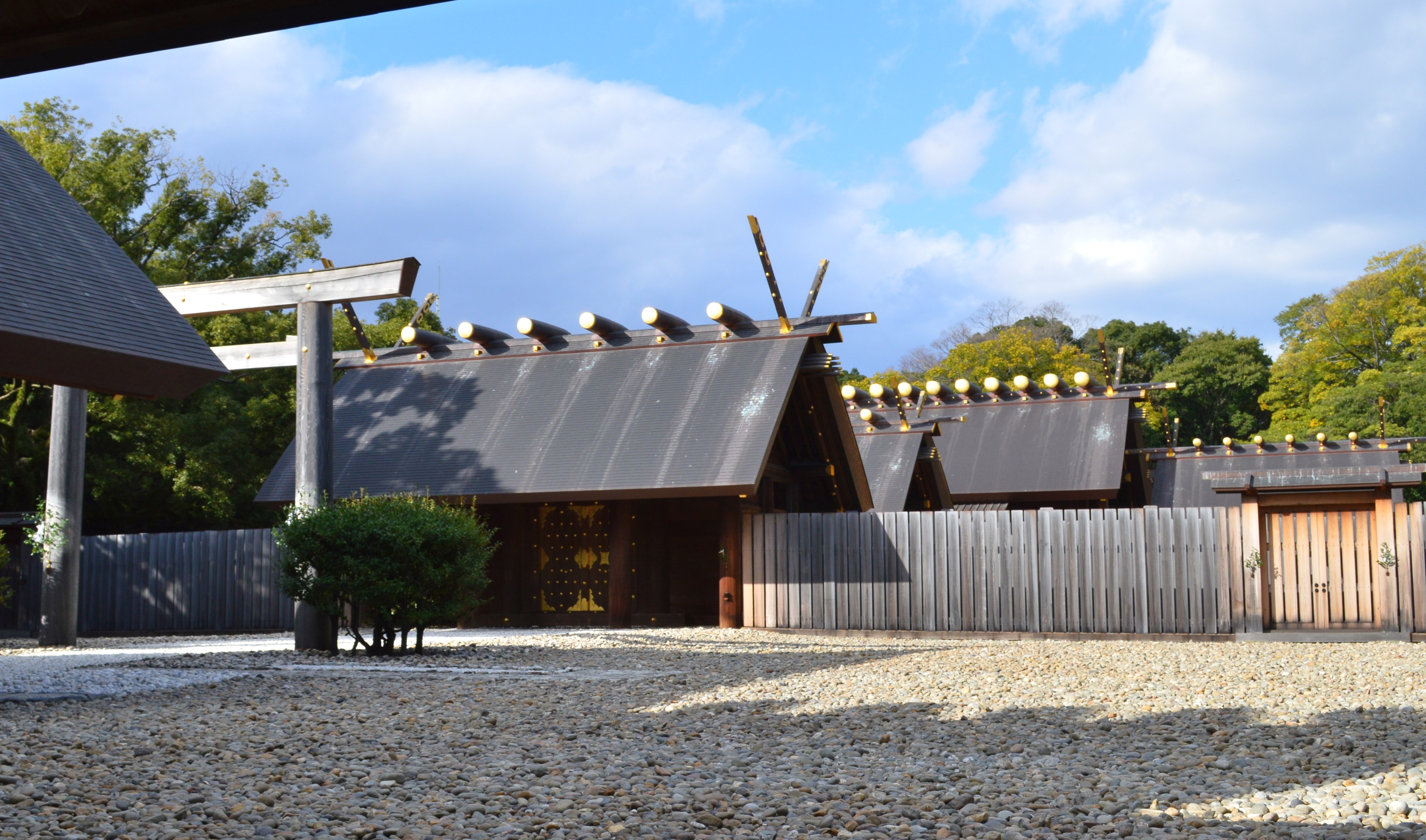
6) Atsuta Shrine: A very sacred Shinto shrine where part of the Japanese Imperial Regalia is held (but not visible to the public).

7) Port of Nagoya: A redeveloped port area with an aquarium, an amusement park, and some museums.

8) SCMaglev & Railway Park: A train museum run by JR Central, with special focus on the Shinkansen and future Maglev systems.

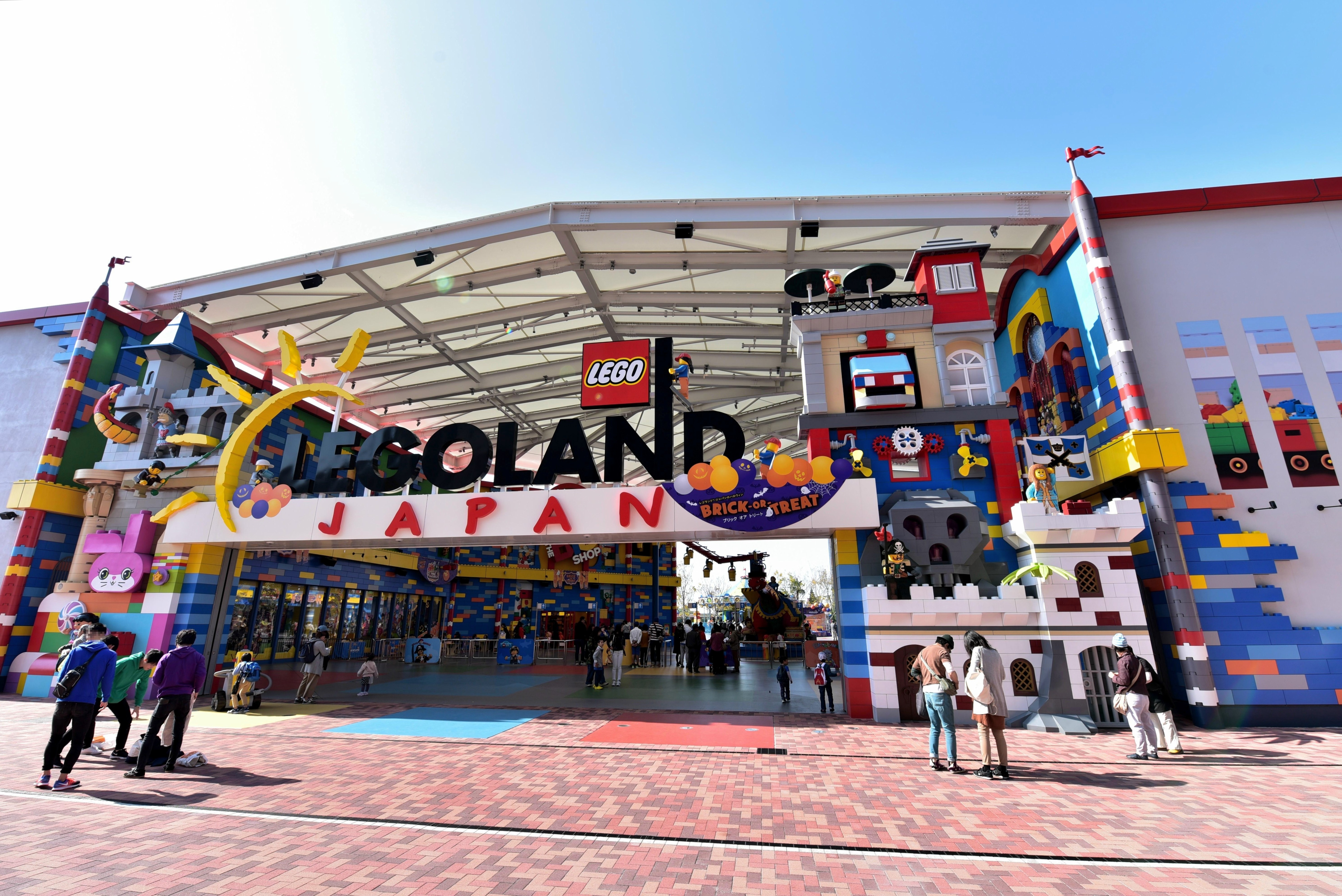
9) Legoland Japan: A new theme park dedicated to the Lego construction toy.

Orientation & Transportation

The main station, Nagoya Station, lies in the centre-west of the city, with most rail lines running through the station to the north and south. It serves the Tokaido Shinkansen and other JR lines, the Higashiyama (H) and Sakura-dori (S) subway lines, and the Aonami (AN) line.  Meitetsu and Kintetsu own stations directly adjacent to the Nagoya Station.  Other major junctions include the adjacent Sakae (Higashiyama and Meijo (M) subway lines) and Hisaya-odori (Sakura-dori and Meijo subway lines), both east of Nagoya Station, and Kanayama (JR Tokaido (CA), Chuo (CF), Meitetsu Nagoya (NH), Subway Meijo, and Meiko (M) lines), southeast of Nagoya Station.

 The following railway companies operate in the Nagoya area:
  • JR Central, or known in Japanese as JR Tokai, operates the high-speed Tokaido Shinkansen (all services), along with a few regular lines: the Tokaido (CA) and Chuo Main Lines (CF) to the east, and the Kansai Main Line (CJ) to the west.  The Japan Rail Pass is valid on these lines (except for Nozomi Shinkansen trains).
  • Meitetsu, a.k.a. Nagoya Railroad, is a private company operating a dense network of lines throughout Aichi Prefecture.  They provide the most convenient access to certain locations, such as the castle town of Inuyama (via the Inuyama (IY) line), and the Chubu Centrair airport (via the Airport (TA) line).
  • Kintetsu is a private company that operates mostly in the Kansai region to the west.  However, their Nagoya (E) line does terminate at Nagoya Station.
  • The Nagoya Municipal Subway network consists of six lines throughout the city.  The Higashiyama (H), Tsurumai (T), and Sakura-dori (S) lines travel east-west through the city centre, the Meijo (M) line loops around the city, and the Meiko (M) and Kamiida (K) lines spur off of the Meijo loop.
  • The Aonami (AN) line is a private line running from Nagoya Station to the southern port area.  For tourists, the line provides access to the SCMaglev & Railway Park museum and the Legoland amusement park, both at the end of the line.
  • The Linimo (L) is a short maglev-powered train line built for Expo 2005.  It starts at the eastern end of the Higashiyama subway line.
In addition, there are local buses operated by the city's Transportation Bureau, Meitetsu, and Mie Kotsu.  One of the most useful buses for tourists is the Me~guru loop bus, which stops at the city's more famous destinations such as the Toyota Techno Museum, Nagoya Castle, and Nagoya TV Tower.  Me~guru buses depart from Nagoya Station every 30-60 minutes on weekdays, or every 20-30 minutes on weekends and holidays.  Rides are ¥210 each, and a one-day pass, which also includes discounts to attractions, costs ¥500.  More information: (English) (Japanese)

Access

The easiest way to get to Nagoya from other cities in Japan is by the Tokaido Shinkansen high-speed train.  All three Tokaido services stop at Nagoya Station.  Travel times and fares from major cities on the Tokaido and Sanyo Shinkansen are as follows:

City Time (Kodama) Time (Hikari) Time (Nozomi)Fare (Reserved)
Tokyo 170 minutes 105-125 minutes 100 minutes ¥11,090
Kyoto 50 minutes 35-55 minutes 35 minutes ¥5,700
Osaka
(Shin-Osaka)
65 minutes 50-70 minutes 50 minutes ¥6,470
Hiroshima 200 minutes* 150-170 minutes* 135 minutes ¥14,070
Fukuoka (Hakata) 315 minutes* 220-240 minutes* 65 minutes ¥18,360
*Selected trains require a transfer at Shin-Osaka Station.
Times and fares are based on October 2019 schedules and are subject to change.

For air traffic, Nagoya is served by Chubu Centrair International Airport, a.k.a. Central Japan International Airport (IATA code: NGO) (English) (Japanese).  The only train service to the airport is by the Meitetsu Airport (TA) line.  In addition to regular services, there are faster limited-express trains with both non-reserved and reserved seating, and the even-faster "μSky Limited Express" (read "Myu Sky") trains, with only reserved seating.  Both kinds of limited-express trains continue on from Nagoya Station to other destinations, including Inuyama and Gifu.

Service Time* Fare
(Non-Reserved)
Fare
(Reserved)
Frequency*
μSky Limited Express 28 minutes N/A ¥1,250 2 per hour
Limited Express 37 minutes ¥890 ¥1,250 2 per hour
Semi-Express 48 minutes ¥890 N/A 2 per hour
*Time and frequency of departures from Central Japan International Airport to Meitetsu-Nagoya Station.

Nagoya's secondary airport is Nagoya Airfield, a.k.a. Komaki Airport (IATA code: NKM), which serves only domestic destinations via Fuji Dream Airways.  Buses between the airport and Nagoya Station take 20 to 40 minutes and cost ¥700.  More information: (Japanese)

There is also a limousine bus service which stops at several hotels on its way to/from the Meitetsu Bus Centre, adjacent to Nagoya Station.  Ride times range from 50 minutes (to/from the Nagoya Tokyu Hotel, near Sakae) to 80 minutes (to/from Meitetsu Bus Centre).  Buses depart once an hour, and the fare is ¥1,200.  More information: (English/Japanese)

Excursions

1) Inuyama: A northern suburb with its own castle and open-air museum.
Access: Meitetsu Inuyama line from Meitetsu-Nagoya to Inuyama (Limited Express: 25 minutes, ¥930; Express: 30 minutes, ¥570).

2) Hikone: A lakeside town with one of Japan's remaining original castles.
Access: Tokaido Shinkansen (Hikari/Kodama) from Nagoya to Maibara (30 minutes), followed by the JR Tokaido line to Hikone (5 minutes, ¥3,280 reserved, JR Pass OK).

3) Ise-Shima Peninsula: Site of Ise Shrine, the most sacred shrine in all of Shinto.
Access: JR Mie Rapid from Nagoya to Ise-shi Station (90 minutes, ¥2,570, JR Pass OK*), or Kintetsu Limited Express from Kintetsu-Nagoya to Ise-shi (80 minutes, ¥2,810).
*Note: Due to the Mie Rapid's use of non-JR tracks, JR Pass holders must pay an extra ¥520 when using this train.

4) Kiso Valley: A collection of preserved post towns along the old Nakasendo highway, which one may hike across.
Access: JR Shinano Limited Express from Nagoya to Nakatsugawa Station (50 minutes, ¥3,070 reserved, JR Pass OK), followed by a bus to Magome (25 minutes, ¥570) (Schedule).

5) Matsumoto: A mountain city with another of Japan's remaining original castles.
Access: JR Shinano Limited Express from Nagoya to Matsumoto (125-140 minutes, ¥6,140 reserved, JR Pass OK).

6) Takayama: A city with a well-preserved old town.
Access: JR Hida Limited Express from Nagoya to Takayama Station (150 minutes, ¥6,140 reserved, JR Pass OK).

Friday, May 12, 2017

Fuji View Hotel

This article is based on a visit made on Thursday, 17 November 2016.

Previously on Sekai Ichi, I visited a few places around Lake Kawaguchi, to the north of Mount Fuji.  I capped off my adventure with an overnight stay at the Fuji View Hotel.

This was the scene when I returned to Kawaguchi-ko Station that evening.  Fujikyu runs special Thomas the Tank Engine-themed trains and buses as tie-ins to the Thomas Land world in Fuji-Q Highland.  Alas, I didn't ride the one seen here, but the hotel does offer a free shuttle bus to and from the station.

Fuji View Hotel has rooms with Western and Japanese style bedding.  Compared to hotels in the cities, the rooms here are much more spacious.  Room sizes start at 36m² (387 ft²), which includes the Japanese-style room I booked.  You can also book most types of rooms with a view of either Lake Kawaguchi or Mount Fuji.

I chose a view of Mt. Fuji, but unfortunately, my visions of waking up to Fuji-san went unfulfilled.  Why?  The morning fog was thick when I got up, at around 6:30, although it did start to lift in the coming hours.  In the meantime, I indulged in the hotel's hot spring baths.  For both men and women, there is an indoor bath and an outdoor bath.  The outdoor bath is situated in front of a small garden and secluded by a bamboo fence.  It wasn't much of a view, but it was peaceful and pleasant, with some of the leaves also having turned bright orange.

There were even more colours about the premises, such as this vivid red tree just outside the entrance.  I really wish I could have stayed longer, to take in the surroundings better, but I was in a hurry.  Case in point, I forgot to pack one of the souvenirs I bought.  A couple of days later, I received an e-mail from one of the hotel staff, in English no less, informing me that I had left it behind in my room.  We then went back-and-forth trying to set it right, and even though I ended up dropping the matter (I couldn't figure out how to send them the money for postage), it just goes to show the level of service they provide at Fuji View Hotel.

And... that's it.  I didn't take that many pictures at the hotel, so as an added bonus, here are some shots I took on the journey from the hotel.

As I rode on the hotel's shuttle bus to Kawaguchi-ko Station, the morning fog started to lift, until I finally got to see Mount Fuji!  It fits so perfectly right behind the station building!


This is one of the express trains used on the Fujikyu line, the Fujisan View Express.  For more information, read my Know Your Trains article on this line.  It would certainly be a stylish way to get to and from here, but instead I left by bus.  There are direct highway buses between Kawaguchi-ko and Mishima, where I was to board the first Shinkansen ride of my trip, but as before, I didn't book my seat ahead of time and couldn't get on.  Fortunately, I had a backup route planned out.  It was more involved and the timing was a little tighter, but it was nothing I couldn't handle.  I took a local bus from Kawaguchi-ko to Gotemba Station, then transfer to two trains to Mishima.  I've described this route on my "Introduction to: Fuji Five Lakes" article.


On its way south, the bus passed Lake Yamanaka (山中湖, Yamanaka-ko), the largest of the Fuji Five Lakes.  If you look off to the right, you can see a swan-boat paddling along the lake.

Mount Fuji continued to be visible as the bus circled around it.  Zooming in close, I could even see the switchbacks of one of the trails leading up its side.

The bus fell behind schedule, but still made it to Gotemba Station in time for me to make my train to Numazu, and my next train from there to Mishima.  I started using my Japan Rail Pass that day, which saved me a minute or two from not having to buy tickets.  I just had to show my pass to the gate attendants, and I was good to go!

I had also reserved tickets for my planned Shinkansen rides ahead of time, so I was able to board my trains without skipping a beat.  The JR Pass allows you to reserve tickets for free, even if you set the pass to activate for a later date.  I made sure to book a seat on the right side of the train for this ride.  That way, I could get one last look at Mount Fuji.  You can see it between Mishima and Shin-Fuji stations.

It's actually kind of hard to take a picture of a Shinkansen train, because they go by so fast.  It helps if they're parked or slowly taking off, as was this train at Hamamatsu Station.  This is a Series 700 train, introduced in 1999 and still in use on the Tokaido and Sanyo Shinkansen.  They are slowly being phased out these days, and are set to be withdrawn from service entirely in the 2019/20 fiscal year, in favour of its upgraded sibling, the Series N700.

Just past Hamamatsu Station, the train passes over this huge lake.  It is called Lake Hamana (浜名湖, Hamana-ko), and it used to be a landlocked freshwater lake, but an earthquake over 500 years ago exposed it to the sea.  Today, there is a theme park, Hamanako Pal-Pal (浜名湖パルパル, Hamanako Paruparu, not shown), on its eastern shore.

On the way to my next hotel, in Osaka, I made an afternoon stopover in Nagoya.  Why is that?  There was a train museum in the area that had captivated my interest: the SCMaglev and Railway Park.  Learn more about it soon, on Sekai Ichi!


Fuji View Hotel

Address: 511 Katsuyama, Fujikawaguchiko-machi, Minamitsuru-gun, Yamanashi 〒401-0310

Access: The hotel offers a free shuttle bus service for staying guests, to and from Kawaguchi-ko Station.  Departures in either direction are hourly from 8:30 AM to 6:30 PM (9:30 AM to 5:30 PM from December to March).  At Kawaguchi-ko Station, the bus stops at platform #10.  Facing out from the station entrance, platform #10 is off to the right.

Alternately, from Kawaguchi-ko Station, take the Green Line Sightseeing Bus (G) to the "Shikishima-no-Matsu" (敷島の松) stop (17 minutes, ¥300).  The bus stop is right next to a road leading up to the hotel from the back.  These are more frequent than the hotel's shuttle bus, but do not operate as early or late.  Buses leave from Kawaguchi-ko Station for the hotel from 9:10 AM to 4:40 PM, and stop at the hotel on their way to the station from 10:30 AM to 6:00 PM.  (Departure times are based on May 2017 schedules and are subject to change.  For the current schedules, visit Fujikyu's website: (English).)

Website: (English) (Japanese)


Thursday, May 11, 2017

Know Your Trains: Fujikyu Railway

This article is based on a visit made on Wednesday, 16 November 2016.

Edit 12 November 2018: Added station numbers to table.

A 1000-series local train at Kawaguchi-ko Station.
Taken on Wednesday, 16 November 2016.
Previously on Sekai Ichi, I described the Kaiji, Azusa, and Super Azusa limited-express services operating on the JR Chuo line.  For those travelling to the Fuji Five Lakes by train, this is only half of the journey.  The other half is the Fujikyu line, operated by the Fuji Kyuko (富士急行, Fuji Kyūkō) Railway Corporation, or Fujikyu (富士急, Fujikyū) for short.  Fujikyu also operates short and long-distance bus lines to and through the area, the Fuji-Q Highland theme park, and other ventures.

Name Type Time* Max. Frequency**
Local Local 65 minutes 1-2 per hour
Thomas Land Train Local 65 minutes 2 per day
Fuji Tozan Densha Rapid 55 minutes 2-3 per day
Fujisan Express Ltd. Exp. 50 minutes 1 per 3 hours
Fujisan View Express Ltd. Exp. 50 minutes 2-3 per day

*Approximate time between start and end stations.
**Departures are based on April 2016 schedules and are subject to change.

Fujikyu operates multiple themed services on its rail line.  In terms of stopping patterns and fares, they can be grouped into three classes: local, rapid, and limited express.  There are two limited-express services, the "Fujisan Express" (フジサン特急, Fujisan Tokkyū) and the "Fujisan View Express" (富士山ビュー特急, Fujisan Byū Tokkyū), but they have the same stopping patterns.  The "Fuji Tozan Densha" (富士登山電車) is a rapid service, making a few extra stops compared to the limited express trains, but requiring only a few more minutes and cheaper fares.  Finally, there is the Thomas Land Train, a local service with special decor themed around the Thomas Land world at Fuji-Q Highland.

No. Name (English) Name (Japanese) Local Fuji Tozan Fujisan Express
FJ01 Otsuki 大月 X X X
FJ02 Kamiotsuki 上大月 X I I
FJ03 Tanokura 田野倉 X I I
FJ04 Kasei 禾生 X I I
FJ05 Akasaka 赤坂 X I I
FJ06 Tsuru-shi 都留市 X I I
FJ07 Yamura-machi 谷村町 X I I
FJ08 Tsuru-bunka Daigaku-mae 都留文科大学前 X O X
FJ09 Tokaichiba 十日市場 X I I
FJ10 Higashi-Katsura 東桂 X I I
FJ11 Mitsutoge 三つ峠 X X I
FJ12 Kotobuki 寿 X I I
FJ13 Yoshiike-onsen-mae 葭池温泉前 X I I
FJ14 Shimoyoshida 下吉田 X X I
FJ15 Gekkoji 月江寺 X I I
FJ16 Fujisan 富士山 X X X
FJ17 Fujikyu Highland 富士急ハイランド X X X
FJ18 Kawaguchiko 河口湖 X X X
Legend
X: All trains stop at this station.
O: Some trains stop at this station.
I: No trains stop at this station.


Notable stops
  • Otsuki: Transfer to and from the JR Chuo line here.
  • Tanokura: Shuttle buses to the Yamanashi Prefectural Maglev Exhibition Centre stop here and at Otsuki Station.
  • Shimo-yoshida: Access to the Chureito Pagoda.
  • Fuji-san: Buses for climbing Mt. Fuji depart from here.
  • Fujikyu Highland: A theme park operated by the Fujikyu group.
  • Kawaguchi-ko: The transportation hub of the Fuji Five Lakes.
The reserved lounge car on a "Fujisan View Express" train.
By Indiana jo [CC BY-SA 4.0], from Wikimedia Commons
Both the Fujisan Express and Fujisan View Express have two cars of non-reserved seats, plus a reserved-ticket lounge car.  Use of these limited-express trains requires a supplement ticket of ¥400, plus an additional ¥200 if you wish to use the first car.  The Fuji Tozan Densha, which consists of two reserved cars, only requires the ¥200 reservation fee.  The reservations are for the cars themselves, not for individual seats in those cars, so you are free to sit in any available seat.  The Thomas Land Train is a local service, so no supplemental tickets are needed beyond the basic fare.

Service Total Cars Non-Reserved Cars Reserved Cars Green Cars
Thomas Land Train 2 2 (Cars #1-2) 0 0
Fuji Tozan Densha 2 0 2 (Cars #1-2) 0
Fujisan Express
Fujisan View Express
3 2 (Cars #2-3) 1 (Car #1) 0

A 5000-series "Thomas Land" train.
By HonAtsu [CC BY-SA 4.0], from Wikimedia Commons
Tips
  • The Japan Rail Pass does not cover any costs for this line, nor do most JR East area passes.  The exception is the Tokyo Wide Pass, which covers all base fares and limited express fees.
  • Major IC cards (Suica, Pasmo, etc.) are accepted on these trains.
Trivia
  • Technically, the Fujikyu line consists of two lines: the Otsuki Line and the Kawaguchiko Line, which meet at Fuji-san Station.  In practise, all trains use both lines consecutively.
  • In terms of elevation, the Fujikyu line climbs almost 500 metres between Otsuki (358m / 1,174 ft. above sea level) and Kawaguchi-ko (857m / 2,811 ft.) stations.
  • The train models used on the Fujikyu line were purchased from other railways.  The Fujikyu 8000 and 8500 series trains, used for the Fujisan Express and Fujisan View Express respectively, were previously used for Odakyu's "Asagiri" (later renamed "Fujisan") limited-express service.
  • Fuji-san Station was known as Fuji-Yoshida Station, named after the city in which it is based, until 2011.
An 8000-series Fujisan Express train, decorated with cartoon images of Mt. Fuji.
By Rsa [CC BY-SA 3.0], from Wikimedia Commons

Wednesday, May 10, 2017

Know Your Trains: Azusa and Kaiji

Edit 26 December 2018: Updated with new maps and pictures.

Edit 3 October 2019: Updated prices to reflect the increase in Japan's national sales tax.

Edit 24 November 2019: Earlier this year, the "Super Azusa" name has been retired and all its trains were renamed as "Azusa".

An E353-series Super Azusa train at Matsumoto Station.
Taken on Saturday, 19 May 2018.
Over the past week, I've been recalling my adventures in the Fuji Five Lakes area.  While I travelled to and from there by bus, it is also possible to get to there from Tokyo by way of train.  There are two parts to this method, as I have discussed before: the JR Chuo line, and the Fujikyu line.  For the former, there are limited express services which make that leg in as little as 60 minutes: the "Azusa" and the "Kaiji".  The Azusa also goes as far as Matsumoto, a city in Nagano prefecture famous for its 400-year-old castle.

Name Start Station End Station(s) Time* Max. Frequency**
Kaiji Shinjuku Kofu 1 hour 45 minutes 1 per hour
Azusa Shinjuku Matsumoto 3 hours 1 per hour
Super Azusa Shinjuku Matsumoto 2 hours 30 minutes 1 per hour
*Approximate time between start and end stations.
**Departures are based on April 2017 schedules and are subject to change.


The Kaiji only goes as far as Kofu Station, whereas the Azusa makes the full journey from Shinjuku to Matsumoto, with some services (former Super Azusa trains) making fewer stops.  Some trains go even farther, with some Kaiji and one Azusa per day starting from Tokyo, and one other Azusa ending at Minami-Otari.  For those looking to transfer to the Fujikyu line, at Otsuki Station, only the Kaiji and some Azusa services stop there.

Name (English) Name (Japanese) Line Kaiji Azusa
Tokyo 東京 JR Chuo O O
Shinjuku 新宿 X X
Mitaka 三鷹 X I
Tachikawa 立川 X X
Hachioji 八王子 X X
Otsuki 大月 X O
Enzan 塩山 X O
Yamanashi-shi 山梨市 X O
Isawa-Onsen 石和温泉 X O
Kofu 甲府 X X
Nirasaki 韮崎 I X
Kobuchizawa 小淵沢 I X
Fujimi 富士見 I O
Chino 茅野 I X
Kami-Suwa 上諏訪 I X
Shimo-Suwa 下諏訪 I O
Okaya 岡谷 I X
Shiojiri 塩尻 I X
JR Shinonoi
Matsumoto 松本 I X
JR Oito
Toyoshina 豊科 I O
Hotaka 穂高 I O
Shinano-Omachi 信濃大町 I O
Hakuba 白馬 I O
Minami-Otari 南小谷 I O
Legend
X: All trains stop at this station.
O: Some trains stop at this station.
I: No trains stop at this station.

The main keep of Matsumoto Castle, accessible from Matsumoto Station.
Taken on Saturday, 19 May 2018.
Notable stops
  • Shinjuku: A bustling transportation and entertainment hub in Tokyo.
  • Mitaka: Location of the Studio Ghibli Museum.
  • Otsuki: Gateway to the Fuji Five Lakes via the Fujikyuko Line.
  • Kofu: The terminus of the Kaiji.
  • Kobuchizawa: The last stop in Yamanashi Prefecture, and the last stop covered by the Tokyo Wide Pass.
  • Chino: Gateway to the Takato Castle ruins, one of Japan's best cherry-blossom spots.
  • Matsumoto: City with a long-standing castle.
  • Shinano-Omachi: The start of the Tateyama-Kurobe Alpine Route.
  • Hakuba: A ski resort used during the 1998 Winter Olympics.
  • Minami-Otari: Where JR East's coverage area ends and JR West's begins.
Since 16 March 2019, Azusa and Kaiji services both use 12-car E353-series trains.  The regular sections have a seat pitch of 96cm (38 in.), while the Green Car section, which takes up half of one car, has seats with 116cm (46 in.) of space.  Among the train's recent upgrades, all seats have electrical outlets, and luggage storage compartments were added to half of the cars, similar to those on the Narita Express or Keisei Skyliner.

Total Cars Non-Reserved Cars Reserved Cars Green Cars
12 4 (Cars #3-6) 5½ (Cars #1-2, 7-9, 10-12) ½ (Car #9)

Tips
  • For those using the Azusa or Kaiji to get to the Fuji Five Lakes, the Japan Rail Pass and most JR East passes will only cover those trains, and not the Fujikyu line.  The exception is the Tokyo Wide Pass, which covers both lines.
  • The Tokyo Wide Pass and Tohoku Area Pass only cover journeys on the Azusa as far as Kobuchizawa, the last stop in Yamanashi Prefecture.  If you are using a Tokyo Wide Pass, you will have to pay for any sections travelled beyond that point, starting from Kobuchizawa.  For example, going the rest of the way to Matsumoto would cost an extra ¥2,190 for reserved tickets.
Trivia
  • "Azusa" (あずさ) is named after the Azusa River in Matsumoto.  The name was first used for express services in 1957-1960, then for the current limited express in 1966.
  • "Kaiji" (かいじ) is named after Kai Province (甲斐国, Kai no kuni), the old counterpart to modern-day Yamanashi Prefecture.  The name was first used for semi-express services in 1961-1965, then express services in 1966-1986, and finally as the current limited express in 1988.
  • The "Super Azusa" (スーパーあずさ, Sūpā Azusa) service was introduced in 1994.  It made fewer stops than the Azusa, and used more advanced trainsets.  On 16 March 2019, the Super Azusa name was retired and all its trains were rebranded as Azusa.
Chuo Main Line Azusa Yatsugatake
An E257-series train, formerly used by Azusa and Kaiji trains until 2019, in front of the Yatsugatake Mountains, between Nagasaka and Kobuchizawa stations.
By Cassiopeia sweet [Public domain], from Wikimedia Commons

Tuesday, May 9, 2017

Kawaguchi-ko Maple Corridor

This article is based on a visit made on Wednesday, 16 November 2016.

Edit 3 October 2019: Updated prices to reflect the increase in Japan's national sales tax.

Previously on Sekai Ichi, I visited the Fuji-Q Highland theme park.  Despite having my schedule cut short by a later bus departure, I still managed to do almost everything I set out to out there.  And yet, I still managed to set aside time for something a little more natural and seasonal.  That would be the so-called Maple Corridor (もみじ回廊, Momiji Kairō) on the other side of Lake Lawaguchi.

To start, I left Fuji-Q Highland by the train station directly adjacent to the park's north exit.  Kawaguchi-ko Station, where I would transfer to one of the many buses, was only one stop away.  Unfortunately, their English is almost but not quite correct.  That said, I still hope to show them my "again" some time... again.

From Kawaguchi-ko Station, I got on the Red Line bus, which circled up around the east coast of Lake Kawaguchi.  The northeast coastline, seen here in the background, is lined with hotels that offer hot spring baths to guests.  Only one of them opens their baths to non-staying visitors, and that one is the Hotel Mifujien.  While its facilities are relatively older, the baths do offer views of Mount Fuji in clear weather.

This vantage point is from the northeast coast of the lake, roughly where the aforementioned hotels are.  You should be able to see Mount Fuji behind this slope here, but the clouds were not cooperating.

This is the entrance to the Kawaguchi-ko Music Forest (河口湖オルゴールの森美術館, Kawaguchiko Orugōru no Mori Bijutsukan), a museum about musical instruments, especially organs and music boxes.  Both the museum hall and the park surrounding it have a distinct classical European aesthetic.  But, that's not what I came here for.

A few stops later, I got off the bus in front of the "Maple Corridor".  Already, we're off to a good start, as many of the trees lining the road have turned bright red.  But, this isn't technically the Maple Corridor just yet.

This is the actual Maple Corridor.  Compared to the picture at the top of this article, which showed trees on the outside of the corridor, the trees here on the inside were mostly green.  I suppose it's because they were sheltered from sunlight by the trees on the outside, and when those go bare, the interior trees will turn in... turn.

There was a virtual rainbow of leaves on display.  Some trees were golden yellow...

...and some trees were fiery red.

Past the end of the corridor, another wall of trees threw some coppery orange into the mix.

Back on the other side of the corridor, there was a model landscape of a farm or somesuch set up.

All in all, there was a definite festival atmosphere to the place.  And I mean that not just from the many people in the place, but literally.  There were food and craft stalls set up in a plaza off to the side, and even a fire-pit set up to warm up around.

Also, I was unaware the United States Marine Corps used a dragon for a mascot, as per this fellow's jacket.  But if he's earned his destiny in heaven, I'm not going to complain.

Remember, cool guys don't look at explosions.  See, it's funny because that tree looks like an explosion... kind of... not really.  Anyway, signing off with a selfie again.


Maple Corridor

Address: Kawaguchi, Fuji Kawaguchiko-machi, Minamitsuru-gun, Yamanashi-ken 〒401-0304

Access: From Kawaguchi-ko Station, take the Red Line Sightseeing Bus (R) to the Ichiku Kubota Art Museum (久保田一竹美術館) stop (20-25 minutes, ¥390).

Hotel Mifujien

Hours: Baths are open for non-staying guests from 1:00 PM to 8:00 PM.

Cost: ¥1,200, not including towel rental.  Free for staying guests.

Address: 207 Azagawa, Fujikawaguchiko-machi, Minamitsuru-gun, Yamanashi-ken 〒401-0304

Access: From Kawaguchi-ko Station, take the Red Line Sightseeing Bus to the Azagawa Onsen Town (浅川温泉街) stop (15-20 minutes, ¥220).

Website: (Japanese)

Kawaguchi-ko Music Forest

Hours: Open from 9:00 AM to 5:30 PM.  Admission ends 30 minutes before closing.  No regular closing days.

Cost: ¥1,800.

Address: 3077-20 Kawaguchi, Fujikawaguchiko-machi, Minamitsuru-gun, Yamanashi-ken 〒401-0304

Access: From Kawaguchi-ko Station, take the Red Line Sightseeing Bus to the Kawaguchi-ko Music Forest Museum (河口湖オルゴールの森美術館) stop (20-25 minutes, ¥330).

Website: (English) (Japanese)

Monday, May 8, 2017

Introduction to: Lake Kawaguchi

This article is based on a visit made on Wednesday, 16 November 2016.

Edit 3 October 2019: Updated prices to reflect the increase in Japan's national sales tax.

Previously on Sekai Ichi, I did an introduction article on the Fuji Five Lakes, but Lake Kawaguchi (河口湖, Kawaguchi-ko, lit. 'river-mouth lake') in particular has so many places of interest, that I'm doing another one just for that.

Major Attractions

1) Kawaguchi-ko Station: The main rail and bus terminal for the area.

Yamanashi Gem Museum
By English: Abasaa 日本語: あばさー (Own work) [Public domain], via Wikimedia Commons
2) Yamanashi Gem Museum: A museum and store for precious gemstones.

3) Kawaguchi-ko Herb Hall: A garden and store for herbs and teas.

KachikachiyamaRopeway
By Ippukucho (Own work) [CC BY 3.0], via Wikimedia Commons
4) Mt. Tenjo / Kachi-Kachi Ropeway: A viewpoint for both Mt. Fuji and Lake Kawaguchi.

Kozantei Ubuya
By English: Abasaa 日本語: あばさー (Own work) [Public domain], via Wikimedia Commons
5) Azagawa Onsen Town: A row of hot spring hotels along the lake's northeastern shore.

T. Mortier Dance Organ, entrance hall, Kawaguchi-ko Music Forest Museum (河口湖 オルゴールの森)
By Yamaguchi Yoshiaki from Japan [CC BY-SA 2.0], via Wikimedia Commons
6) Kawaguchiko Music Forest: A European-themed museum and park for automated musical instruments.

7) Maple Corridor: A site on the north shore famous for autumn colours.

8) Itchiku Kubota Museum: An art museum dedicated to the 20th-century kimono painter.

Kawaguchiko Momiji Tunnel Fuji
By Fabimaru (Own work) [CC BY-SA 4.0], via Wikimedia Commons
9) Maple Tunnel: Another autumn colour site further along the north coast.

Orientation and Transportation

Kawaguchi-ko Station, the main train and bus terminal in the region, is just south of the eponymous lake.  Many buses depart from these stations, most notably the three Omni-bus lines, two of which serve Lake Kawaguchi.
  • The Kawaguchi-ko Sightseeing Bus, or "Red Line", departs every 15 minutes, and travels north across the shore of Lake Kawaguchi.  All of the attractions I have listed above are near stops along the Red Line, except for the Maple Tunnel.
  • The Sai-ko Sightseeing Bus, or "Green Line", departs every 30 minutes, and covers the southern shore of Lake Kawaguchi as well as Lake Sai.
Timetables and route maps of these lines are available on Fujikyu's English website (link), while individual fares are only listed on their Japanese website (link).  A two-day pass for unlimited use of the Red, Green, and Blue lines is available for ¥1,500.  IC cards (Suica, Pasmo, etc.) are not yet accepted on these buses, so have cash fare or a pass ready.

Access

See the overview article on the Fuji Five Lakes for access information.