COVID-19 Coronavirus Notice

COVID-19 Coronavirus Notice

Updated 2 July 2020

If you are reading this message, please be aware of travel restrictions in place as part of measures to contain the spread of the COVID-19 "Coronavirus" and its symptoms. Japanese authorities are refusing entry to individuals from, or who have been to, a list of over 100 countries (More information). All other visitors must apply for a visa, and undergo a quarantine upon entering the country. Within the Japan, there are no longer any travel restrictions, and most public attractions have re-opened with precautions for sanitation and social distancing. In short, travel to Japan is not recommended at this time, until the situation normalises. I will not be editing my individual articles to reflect this, but again, please keep this in mind when reading them.
Showing posts with label introduction. Show all posts

Wednesday, December 18, 2019

Introduction To: Matsumoto

Matsumoto (松本) is a city in Nagano Prefecture.  Before the Meiji restoration, it served as the capital city of Shinano Province.  Its chief attraction is the eponymous Matsumoto Castle, one of the twelve original castles to have survived intact since the feudal era.  Situated at the eastern base of the Japan Alps, Matsumoto is also an ideal base for excursions into outdoor treasures like Kamikochi Park and the Tateyama-Kurobe Alpine Route.

Main Attractions

The main keep of Matsumoto Castle, accessible from Matsumoto Station.
Taken on Saturday, 19 May 2018.
1) Matsumoto Castle: A black-walled castle that has survived since the late 16th century.

2) Nakamachi District: A neighbourhood of old white-walled merchant's houses and unique museums.

By 663highland [GFDL, CC-BY-SA-3.0 or CC BY 2.5], from Wikimedia Commons
3) Matsumoto City Museum of Art: A museum of modern art, with a particular focus on local-born artist Yayoi Kusama (草間 彌生, b. 1929).

By Saigen Jiro [CC0], from Wikimedia Commons
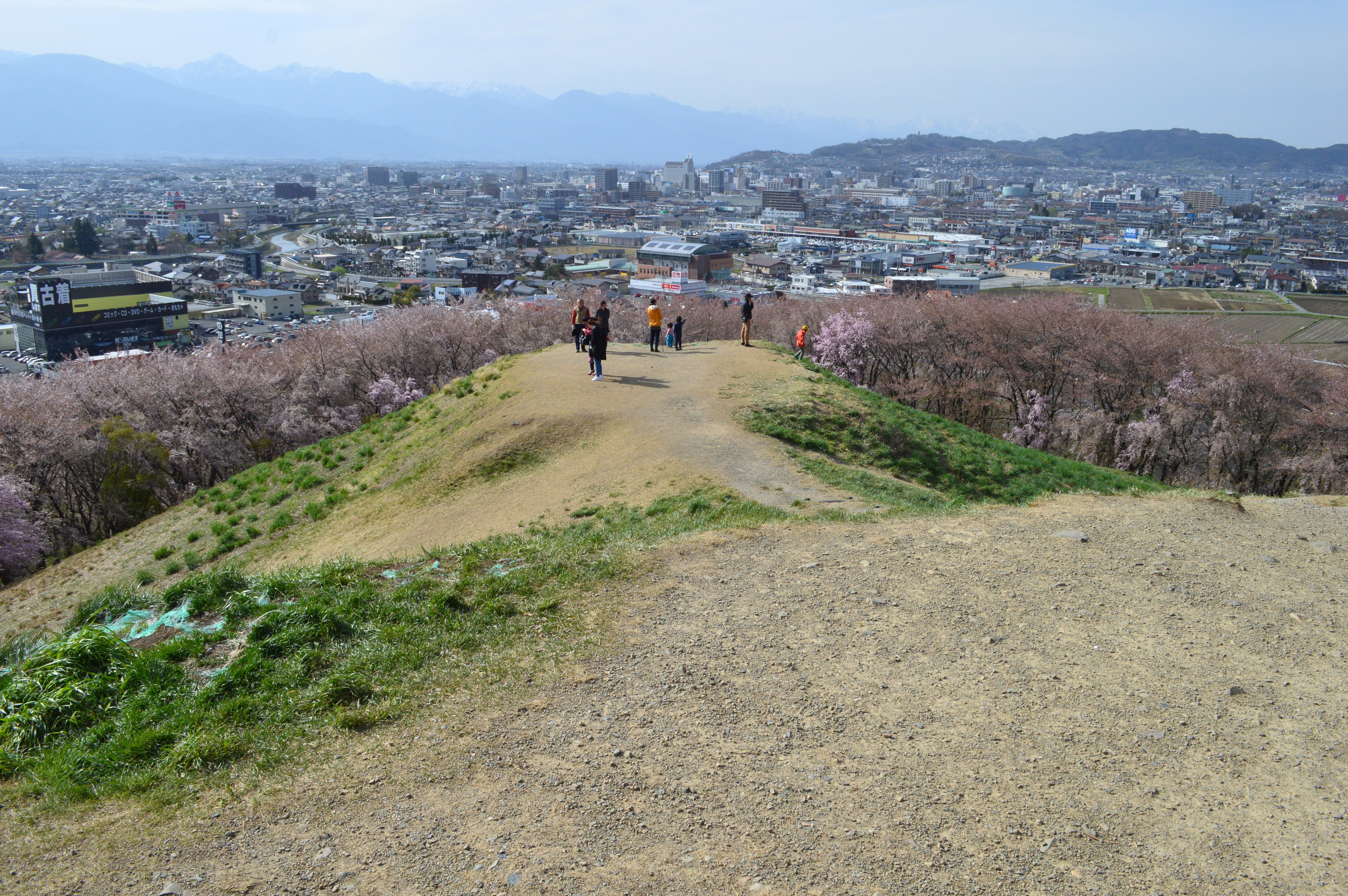
4) Koboyama Park: A park on the city's outskirts built on top of a former burial mound, adorned with thousands of cherry trees.

By photo: Qurren (talk)Taken with Canon IXY 10S [GFDL or CC BY-SA 3.0], from Wikimedia Commons
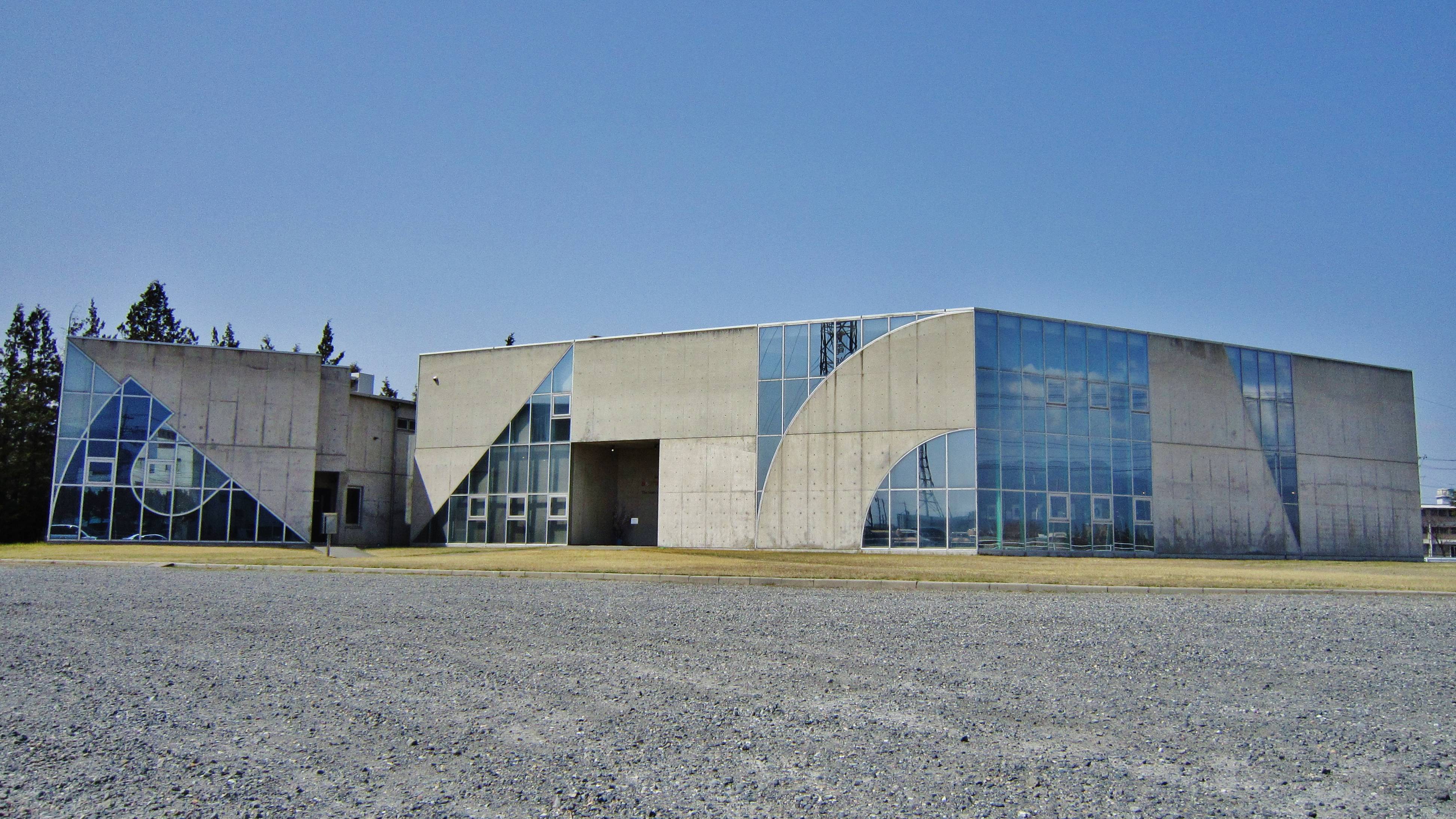
5) Japan Ukiyo-e Museum: An outlying museum about Japanese woodblock-print art.

By Wiiii [GFDL or CC BY-SA 3.0], from Wikimedia Commons
6) Kaichi School Museum: One of Japan's first school buildings, preserved from the Meiji Period (late 19th century).

mapplefan8 [CC BY-SA 3.0], via Wikimedia Commons
7) Asama Onsen: A hot-spring town within Matsumoto's city limits.

Orientation

Matsumoto Station stands to the east or southeast of most of the city's attractions.  For avid walkers, many destinations, including Matsumoto Castle, can be reached on foot within 15-20 minutes.  For everyone else, there is a network of tourist-oriented loop buses called the Town Sneaker buses.  There are four Town Sneaker routes: North, East, South, and West.  Of the greatest import to tourists are the north bus, which stops at the castle, and the east bus, which stops at Nakamachi and the Matsumoto City Museum.  They cost ¥200 per ride, or ¥500 for a one-day pass (which includes discounts at various spots), and buses arrive every 20-30 minutes.  More information: (Japanese)

Access

From Tokyo, the most direct way to get to Matsumoto is by the Azusa limited express train, along the Chuo Main Line.  The one-way journey from Shinjuku Station takes 2½ to 3 hours, and costs ¥6,620 for a reserved seat.  From Tokyo Station, it may be faster to take the Hokuriku Shinkansen to Nagano (80-100 minutes), then the Wide View Shinano limited express to Matsumoto (50 minutes).  In total, this costs at least ¥10,300 (reserved).  Both options are fully covered by the Japan Rail Pass and the JR East Nagano-Niigata Pass.  From western cities, take the Tokaido Shinkansen to Nagoya, then the Wide View Shinano limited express to Matsumoto (120 minutes, ¥6,410 reserved).

Highway buses, operated by Alpico Kotsu, are available to and from Tokyo's Shinjuku Station (3 hours, ¥3,800), Takayama (2½ hours, ¥3,250 one-way / ¥5,760 round-trip), and more.  If you have a JR East Nagano-Niigata pass, you can buy a round-trip bus ticket from Matsumoto to Takayama for a discounted ¥4,500.  More information: (English) (Japanese)

There is also a small airport, Shinshu-Matsumoto Airport (IATA code: MMJ), 8km (5 mi) south of the city.  It only serves a couple of domestic destinations: Fukuoka, Sapporo, and during the month of August, Osaka-Itami.  A shuttle bus between the airport and bus terminal is timed to meet all flights.  The ride takes 30 minutes and costs ¥600.  More information: (Japanese)

Excursions

1) Daio Wasabi Farm: A wasabi (spicy horseradish) farm open to visitors.
Access: JR Oito line from Matsumoto to Hotaka Station (30 minutes, ¥320, JR Pass OK), followed by a 10-minute taxi (~¥1,300) or shuttle bus ride (¥600 one-way / ¥1,000 round-trip) (Schedule).  Buses are only available on weekends and holidays, from mid-April to October.

2) Omachi: A starting point for crossing the Tateyama-Kurobe Alpine Route.
Access: JR Oito line from Matsumoto to Shinano-Omachi Station (60 minutes, ¥680, JR Pass OK).

3) Hakuba: A ski resort used during the 1998 Winter Olympics.
Access: JR Oito line from Matsumoto to Hakuba Station (105 minutes with 1 transfer, ¥1,170, JR Pass OK).

4) Nagano: The prefecture's capital city, and the host of the 1998 Winter Olympics.
Access: JR Shinano limited express from Matsumoto to Nagano Station (50 minutes, ¥2,900 reserved, JR Pass OK).

5) Kamikochi: A national park in the northern Japan Alps, centred around a river nestled between mountains.  Open only from April through November.
Access: Alpico line from Matsumoto to Shin-Shimashima Station (30 minutes), followed by a bus to Kamikochi (65 minutes, total ¥2,500 one-way / ¥4,650 round-trip) (Schedule).

6) Kiso Valley: A collection of preserved post towns along the old Nakasendo highway, which one may hike across.
Access: JR Shinano limited express from Nagoya to Nakatsugawa Station (75 minutes, ¥4,370 reserved, JR Pass OK), followed by a bus to Magome (25 minutes, ¥570) (Schedule).

Friday, September 13, 2019

Introduction to: Takayama

Edit 15 October 2019: Updated prices to reflect the increase in Japan's national sales tax.

Takayama (高山) is a city in the northern half of Gifu Prefecture (formerly Hida Province).  Despite, or rather because of, its isolated and mountain-logged location, the city thrived economically during the Edo period through the high reputation of its wooden crafts.  Today, Takayama is most famous for its festivals, which are held semi-annually April and October, and rank among the top three festivals in all of Japan.  Even outside of festival times, Takayama attracts visitors with its historic old town, and other attractions such as the Hida Folk Village open-air museum.  Takayama also makes an ideal base camp for excursions into more rural areas of the northern Chubu region, such as Shirakawa-go, Oku-Hida, and Kamikochi.

Main Attractions

1) Hachiman Shrine and Yatai Kaikan: A Shinto shrine and a neighbouring museum of festival floats.

By Bernard Gagnon [GFDL or CC BY-SA 3.0], from Wikimedia Commons
2) Kusakabe Heritage House: A former merchant's home preserved as a museum.

3) Showa-kan Museum: A museum of nostalgic goods and scenery from the postwar decades.

4) Old Town: A neighbourhood of museums, shops, cafes, and sake breweries, preserved from the Edo period.

User: Bgabel at wikivoyage shared [GFDL or CC BY-SA 3.0], from Wikimedia Commons
7) Takayama Jinya: An Edo-period government office preserved as a museum.

By Bernard Gagnon [GFDL or CC BY-SA 3.0], from Wikimedia Commons
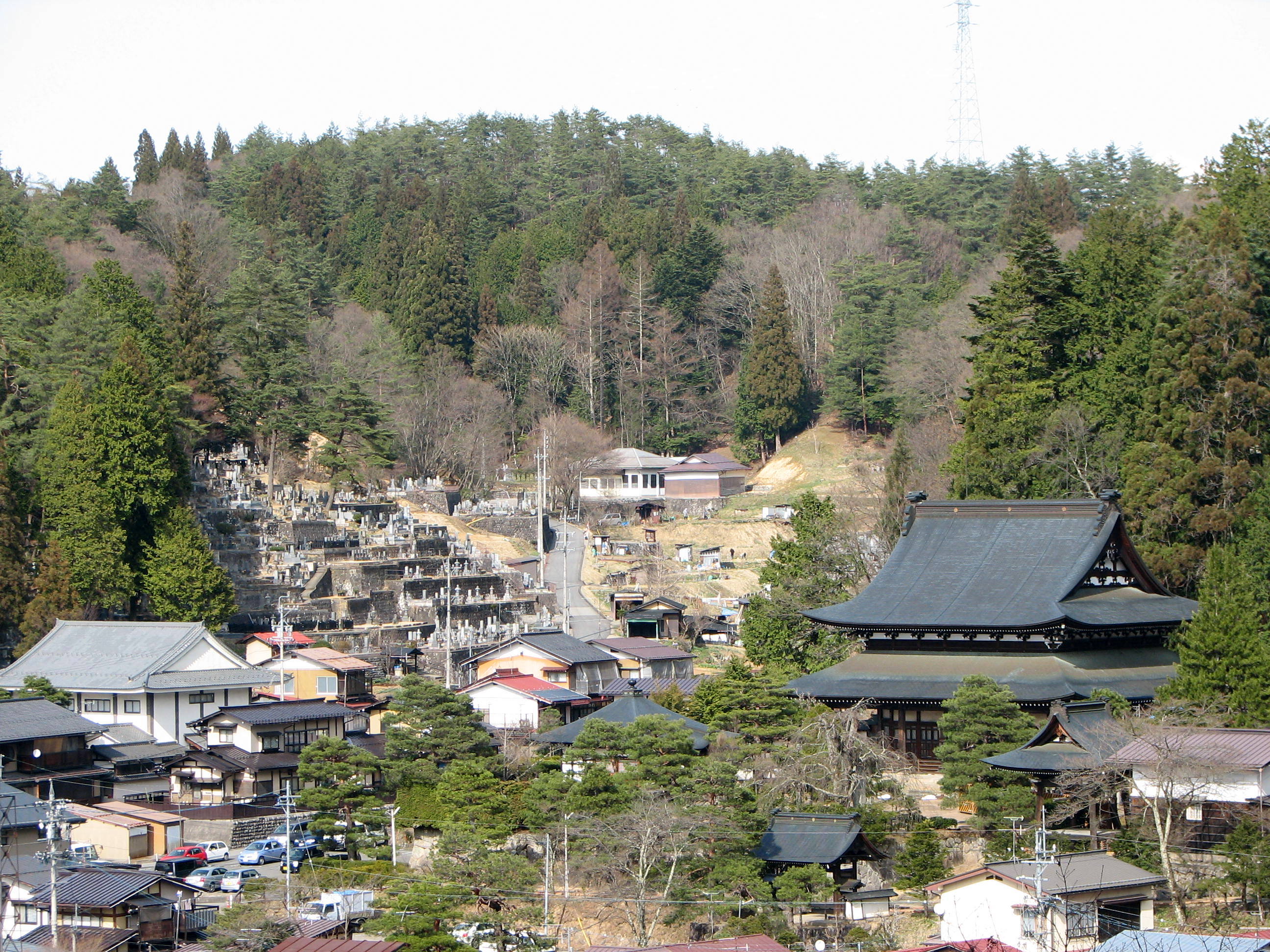
6) Higashiyama Temple Town: A walking trail, lined by many Buddhist temples, leading to a former castle site atop a hill.

7) Hida Folk Village: An open-air museum of farmhouses transplanted from rural regions nearby.

Opqr [CC BY-SA 4.0], via Wikimedia Commons
8) Festival Forest: An out-of-the-way, but excellent museum about the Takayama Festival.

Orientation and Transportation

Takayama is bisected by the Miyagawa river, with the old town and most other sights on its east side.  The Takayama train station and bus terminal are both to the west of the river.  To reach the bus terminal from the station, turn left out of the East Exit.

Takayama is a highly walkable town, with most sights within 15 minutes on foot from the station.  There are also a couple of loop buses, both of which start at the bus terminal.  The "Machinami" bus goes east into the old town, departs hourly in both clockwise and anticlockwise directions, and costs ¥100 per ride.  The "Sarubobo" bus goes west to Hida Folk Village and the Festival Forest, departs twice per hour in alternating routes (one heads straight back from Hida Folk Village), and costs ¥210 per ride.  A one-day pass for both buses costs ¥630, and also offers discounts at select attractions.  This ticket may be purchased from the bus terminal.  Information and schedule: (English)

Access

To get from Tokyo to Takayama, your options are:
  • Take the Tokaido Shinkansen from Tokyo or Shinagawa to Nagoya (100-120 minutes, 2 Hikari/6 Nozomi per hour), and from there take the Wide View Hida limited express to Takayama (140 minutes, 1 per 1-2 hours).  The entire journey costs ¥14,980 for reserved tickets and, unless you take a Nozomi train to Nagoya, is fully covered by the Japan Rail Pass.
  • Take the Hokuriku Shinkansen from Tokyo or Ueno to Toyama (130-150 minutes, 1-3 per hour), and from there take the Wide View Hida to Takayama (90 minutes, 4 per day).  The entire journey costs ¥16,120 for reserved tickets, and is fully covered by the Japan Rail Pass.  While this is potentially faster than going through Nagoya, there are fewer connections via Toyama.
  • Take the Azusa or Super Azusa (160 minutes, 1-2 per hour, ¥6,620 reserved) limited express to Matsumoto, and from there take a highway bus to Takayama (145 minutes, 1 per 1-2 hours, ¥3,250 one-way/¥5,660 round-trip).  The train is covered by the Japan Rail Pass, but the bus is not.  More information: (English)
    • However, if you have a JR East Nagano-Niigata Area Pass, not only is the train covered, but you can also buy a round-trip bus ticket between Matsumoto and Takayama for a discounted ¥4,500.
  • Take a highway bus from Shinjuku Station's bus terminal (4½ hours, every 1-3 hours, ¥6,500 on weekdays / ¥7,000 on weekends and holidays).  More information: (English)
From western cities, your best bet is to go via Nagoya.  Take the Tokaido Shinkansen from Kyoto (35-50 minutes) or Shin-Osaka (50-65 minutes) to Nagoya, and the Hida express from there to Takayama.  The entire journey, for reserved tickets, costs ¥10,140 from Kyoto or ¥10,800 from Shin-Osaka.

Note: If you wish to visit Takayama during either the spring (14-15 April) or autumn (9-10 October) festivals, be aware that accommodation in the city is liable to be booked months in advance.  If needs be, you can try booking a room in another nearby city, like Furukawa or Gero Onsen (see below).  Any farther, and you risk not being able to make it back late at night.

Excursions

1) Shirakawa-go: A village famous for its thatched-roof farmhouses, where one can stay overnight.
Access: Bus from the Takayama Hida Bus Centre to Shirakawa-go (50 minutes, 1-2 per hour, ¥2,600 one-way / ¥4,600 round-trip).  More information: (English)

2) Furukawa: A small town with its own history of crafts and festivals.
Access: JR Takayama line from Takayama to Hida-Furukawa Station (15-20 minutes, 1 per hour, ¥240, JR Pass OK).

3) Hirayu Onsen: A hot-spring resort town at the foot of the Oku-Hida region.
Access: Bus from the Takayama Hida Bus Centre to Hirayu Onsen (60 minutes, 2 per hour, ¥1,600).  More information: (English)

4) Shin-Hotaka Ropeway: A double-decker cable car leading up to a mountain trailhead.
Access: Bus from the Takayama Hida Bus Centre to Shin-Hotaka Ropeway (90 minutes, 2 per hour, ¥2,200).  More information: (English)

5) Kamikochi: A national park in the northern Japan Alps.  Open only from April through November.
Access: Bus from the Takayama Hida Bus Centre to Hirayu Onsen (60 minutes, 2 per hour), followed by another bus to Kamikochi Bus Terminal (25 minutes, 2 per hour, total ¥2,780).  More information: (English)

6) Gero Onsen: An urban, but famous, hot-spring resort straddling the Hida river.
Access: JR Hida limited expess from Takayama to Gero Station (45 minutes, 1 per hour, ¥2,280 reserved, JR Pass OK).

Wednesday, May 15, 2019

Introduction to: Kanazawa

Edit 11 October 2019: Updated prices to reflect the increase in Japan's national sales tax.

Kanazawa (金沢, lit. 'gold marsh') is the capital city of Ishikawa Prefecture.  During the Edo Period, Kanazawa was the seat of the Maeda clan, whose riches were second only to the Tokugawa Shogunate itself.  From all this wealth, the city hosted production of many fine crafts, such as gold leaf and ceramic pottery.  Since much of Kanazawa's value was historical and cultural, rather than industrial, it was never targeted for air raids in World War II, the second-largest city (behind Kyoto) to bear this fortunate distinction.  This has led to the preservation of several teahouse and samurai districts, along with Kenroku-en, one of Japan's top three landscape gardens.  And yet, Kanazawa had managed to stay off the tourism radar, but that changed in 2015, when the Hokuriku Shinkansen was extended to the city.

Main attractions

1) Higashi Chaya District: The largest of Kanazawa's teahouse districts, in the northeast of the city.

2) Kanazawa Castle Park: The site of the partially-rebuilt Kanazawa Castle.

3) Kenroku-en: One of the three most famous landscape gardens in Japan.

4) 21st Century Museum of Contemporary Art: A modern art museum with unique sculptures and installations.

By 金沢市 (http://open-imagedata.city.kanazawa.ishikawa.jp/) [CC BY 2.1 jp], via Wikimedia Commons
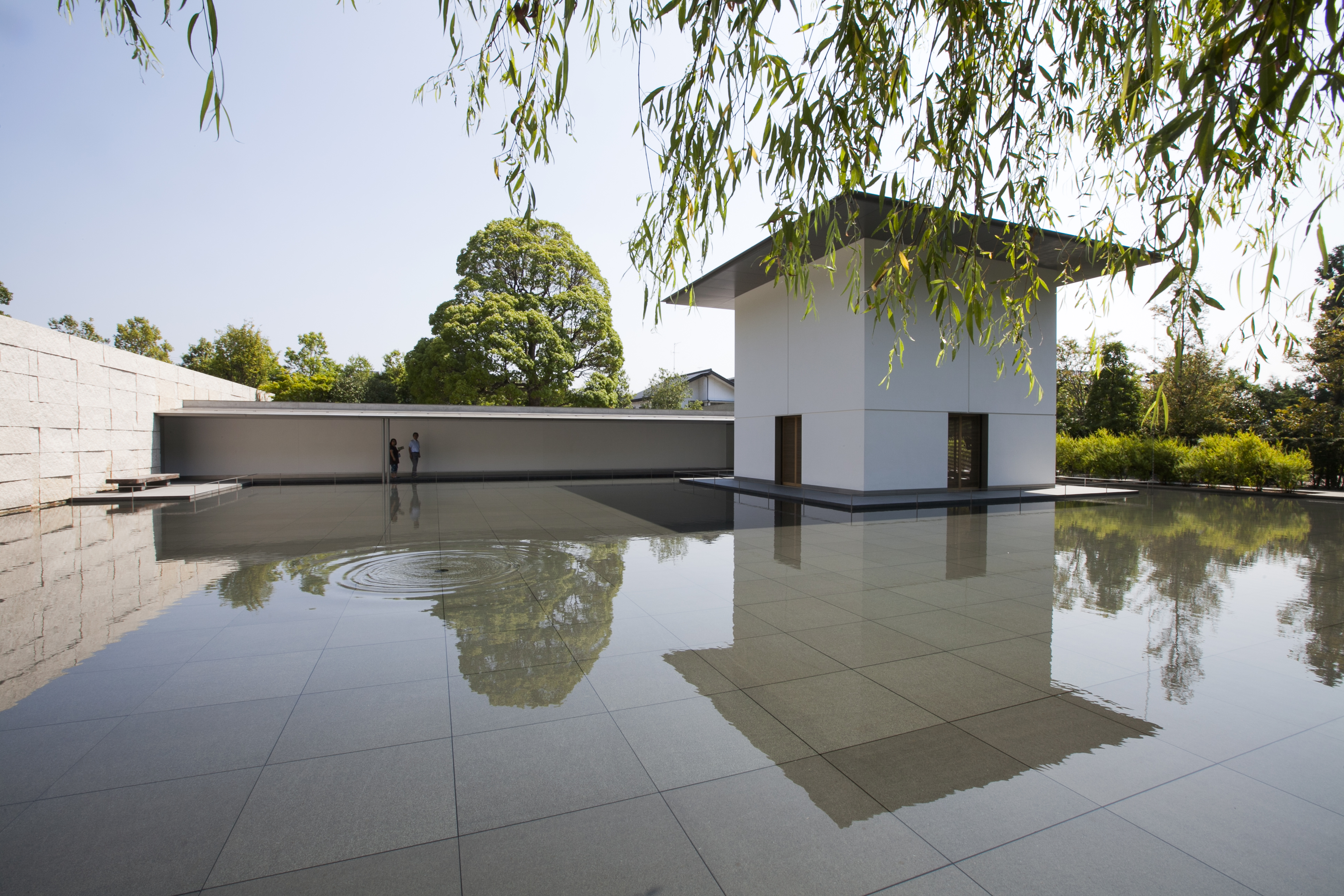
5) D.T. Suzuki Museum: A sleek, contemplative museum about Daisetz Teitaro Suzuki, a Buddhist philosopher.

By そらみみ [CC BY-SA 4.0], from Wikimedia Commons
6) Oyama-jinja: A downtown Shinto shrine fronted by a Dutch-style gate.

7) Nagamachi: A former samurai district with preserved buildings and a few museums.

By 金沢市 (http://open-imagedata.city.kanazawa.ishikawa.jp/) [CC BY 2.1 jp], via Wikimedia Commons
8) Nishi Chaya District: The secondary teahouse district in the southwest of the city.

By Oren Rozen [CC BY-SA 4.0], from Wikimedia Commons
9) Myoryu-ji: A Buddhist temple, also known as the "ninja temple" for its secret defences.

Orientation

Kanazawa is centred around the Kanazawa Castle Park and Koraku-en garden, with Kanazawa Station off to the northwest.  The station and most other sites are within two kilometres of the parks, so the city is accessible on foot for good walkers.  For everyone else, there are a few buses that run through the city.
  • The Kanazawa Left Loop and Right Loop buses start and end at the station, and hit many popular sights in an anticlockwise or clockwise loop, respectively.  Loop buses arrive at any given stop every 15 minutes and cost a flat rate of ¥200 per ride. More information: (English)
  • The Kenrokuen Shuttle Bus follows an abridged version of the loop bus itinerary.  From Kanazawa Station, it heads to the Kenroku-en area and back.  Shuttle buses arrive every 20 minutes, and cost ¥200 per ride on weekdays, or ¥100 on weekends.
    • A one-day free pass for both the Kanazawa Loop and Kenrokuen Shuttle buses costs ¥500.  Purchase it from the Transportation Information Centre, just outside the East exit of Kanazawa Station, or the Hokutetsu Bus Terminal, out and to the left of said exit.
  • JR West also operates their own local bus route from Kanazawa Station to Kenroku-en, the Higashi Chaya district, and beyond.  These buses arrive 1 to 3 times per hour.  Fares start at ¥200, and are free with the Japan Rail Pass.  However, the above-mentioned loop/shuttle bus pass is not valid on these JR buses.  Schedules: (Japanese)
Apart from buses, the following rail companies operate around Kanazawa:
  • JR West operates the high-speed Hokuriku Shinkansen, to the northeast, and the local Hokuriku Main Line, to the southwest.
  • IR Ishikawa Railway operates the IR Ishikawa line to the northeast.  This line used to be part of the Hokuriku Main Line, but was spun off into its own company when the Hokuriku Shinkansen opened.
    • The Japan Rail Pass may not be used on the IR Ishikawa Railway.  However, it is valid on the section between Kanazawa and Tsubata Stations, as long as you only get on/off at those stations.
  • Hokutetsu, or Hokuriku Railroad, operates two short suburban lines.  The Asanogawa line goes north from Kanazawa Station, and the Ishikawa line goes south from Nomachi Station, near the Nishi Chaya district.
Access

On 14 March 2015, the Hokuriku Shinkansen was extended to Kanazawa Station, providing a direct rail link to Tokyo for the first time.  Kanazawa is served by Hakutaka, Kayagaki, and Tsurugi services, the latter of which terminate at Toyama.  Coming from the other direction, western cities are also served by limited express trains such as the Shirasagi from Nagoya, and the Thunderbird from Kyoto and Osaka.  If you are coming in from Nagoya, it may be faster to take the Tokaido Shinkansen to Maibara (30 minutes, Kodama/Hikari only), and then take the Shirasagi from there (2 hours, total ¥8,160 reserved).  All of the above train options are covered by the Japan Rail Pass.

City Time
(Hakutaka)
Time
(Kayagaki)
Time
(Tsurugi)
Time
(Shirasagi)
Time
(Thunderbird)
Fare
(Reserved)
Tokyo 180 minutes 150 minutes N/A N/A N/A ¥14,380
Nagano 90 minutes 65 minutes N/A N/A N/A ¥9,120
Toyama 25 minutes 20 minutes 25 minutes N/A N/A ¥3,390
Nagoya N/A N/A N/A 180 minutes N/A ¥7,460
Kyoto N/A N/A N/A N/A 120-140 minutes ¥7,020
Osaka N/A N/A N/A N/A 150-170 minutes ¥7,790
Times and fares are based on May 2019 schedules and are subject to change.

The closest airport to Kanazawa is Komatsu Airport (IATA code: KMQ), located about 30 kilometres (18 miles) southwest of central Kanazawa.  It serves a few domestic (Tokyo, Sapporo, Fukuoka, etc.) and international (Seoul, Shanghai, Taipei, and Hong Kong) locations.  More information: (English) (Japanese)

To get to Kanazawa from the airport, take a bus to Komatsu Station (12 minutes, 2 per hour, ¥280) and ride the JR Hokuriku line to Kanazawa (35 minutes, ¥510).  Most Thunderbird and Shirasagi trains also stop at Komatsu Station (17 minutes, ¥1,800 reserved).  Or, there are direct buses that go between the airport and Kanazawa Station (40 minutes, 1-2 per hour, ¥1,150).  More information: (English)

Excursions

1) Takaoka: A neighbouring city with a rich bronze-casting history and one of Japan's largest Buddha statues.
Access: Hokuriku Shinkansen (Hakutaka/Tsurugi) from Kanazawa Station to Shin-Takaoka (15 minutes, ¥1,560 non-reserved, JR Pass OK); or IR Ishikawa / Ainokaze Toyama Railway to Takaoka (40 minutes, ¥840).

2) Toyama: A port city, ideal as a base for exploring the northern Chubu region.
Access: Hokuriku Shinkansen from Kanazawa Station to Toyama (20 minutes, ¥3,390 reserved, JR Pass OK).

3) Kaga Onsen: A nearby collection of hot-spring towns and museums.
Access: JR Thunderbird/Shirasagi limited express from Kanazawa to Kaga Onsen Station (25 minutes, 1-3 per hour, ¥2,060 reserved, JR Pass OK).

4) Shirakawa-go: A secluded village famous for its thatched-roof farmhouses, where one can stay overnight.
Access: Bus from Kanazawa Station (East exit) to Shirakawa-go (85 minutes, 1-2 per hour, ¥2,000 one-way / ¥3,600 round-trip) (Schedule).

5) Haku-san: A 2,702-metre (8,864 ft.) peak, regarded as one of Japan's most sacred mountains.
Access: Bus from Kanazawa Station (East exit) to Bettodeai (2 hours 15 minutes, 1-3 per day, ¥2,240) (Schedule).

6) Wakura Onsen: A hot-spring resort city, ideal as a base for exploring the remote Noto Peninsula.
Access: JR Noto Kagaribi limited express from Kanazawa to Wakura Onsen Station (60 minutes, ¥2,800 reserved, 1 per 2-3 hours, JR Pass OK).

Tuesday, April 9, 2019

Introduction to: Tateyama-Kurobe Alpine Route

This article is based on a visit made on Wednesday, 16 May 2018.

Edit 11 October 2019: Updated prices to reflect the increase in Japan's national sales tax.
Edit 14 May 2020: Updated to add information on luggage forwarding services

The Tateyama-Kurobe Alpine Route (立山黒部アルペンルート, Tateyama Kurobe Arupen Rūto) is a sequence of transportation sections traversing the northern Japan Alps.  The concept of the Alpine Route came about after the construction of the Kurobe Dam, the largest hydroelectric dam in Japan.  Roads and tunnels built to aid in the dam's construction were re-tooled for tourism, creating the Alpine Route in 1971.  Visitors traversing the route will ride various trains, buses, and cable cars, all the while witnessing beautiful natural vistas, with multiple opportunities to stop and take hikes.  The entire route is opened only from mid-April to the end of November.

The route may be crossed in either direction, or you may also go to a certain point and turn back mid-way.  For the purposes of this blog, I will describe the route going from west to east, since that is how I took it.  Also, English reading order.

Transportation Sections

A) Toyama Chiho Railway: Not officially part of the Route, but the best method to access Tateyama Station, its westernmost point.
Time: 60 minutes
Departures: 1 per hour

B) Tateyama Cable Car: An inclined cable car at the western base of Mount Tateyama.
Time: 7 minutes
Departures: Every 20 minutes

663highland / CC BY-SA
C) Highland Bus: A regular bus service climbing most of the way up Tateyama, with occasional stops at the Midagahara plateau.
Time: 50 minutes
Departures: Every 40 minutes

D) Tateyama Trolleybus: A trolleybus, powered by overhead electricity, driven along a tunnel cut through the top of Tateyama.
Time: 10 minutes
Departures: Every 30 minutes

E) Tateyama Ropeway: The longest single-span (1.6km / 1 mi.) hanging cable-car in Japan.
Time: 7 minutes
Departures: Every 20 minutes

F) Kurobe Cable Car: An inclined cable car at the eastern base of Tateyama.
Time: 5 minutes
Departures: Every 20 minutes

G) Kanden Trolleybus: A trolleybus cutting through a tunnel within Mount Akasawa-dake, linking Kurobe Dam to the outside world.
Time: 16 minutes
Departures: Every 30 minutes

H) Alpico Kotsu Bus: A local transportation company offering regular buses to Omachi, and highway buses to Nagano.  Not officially part of the Route, but the best method to access Ogizawa, its easternmost point.
Time: 40 minutes (to Omachi), 105 minutes (to Nagano)
Departures: 1-3 per hour (to Omachi), 1 per hour (to Nagano)

Stops and Attractions

XF10 / CC BY-SA
1) Tateyama: The western end of the Alpine Route, boasting a few small museums.

Bijodaira04bs3200
663highland / CC BY-SA
2) Bijodaira: A virgin beech/cedar forest, with giant trees and folk legends.

Shomyo Falls (left) and Hannoki Falls (right).
I, Kahusi / CC BY-SA
3) Shomyo Falls: The tallest regular waterfall (350m / 1,148 ft.) in Japan.  In Spring, melting snow feeds the even taller (497m / 1,640 ft.) Hannoki Falls.

Alpsdake / CC BY-SA
4) Midagahara: One of the largest and highest alpine wetlands in Japan, with boardwalk-lined hiking trails.

5) Murodo: The highest point (2,450m / 8,038 ft.) of the Alpine Route, with many more hiking trails.  From April to June, a canyon is carved out of snow accumulated over the winter.

6) Daikanbo: The upper station of the Tateyama Ropeway.  Offers sweeping views looking down upon Kurobe Dam and the surrounding valley.

くろふね [CC BY 3.0], via Wikimedia Commons
7) Kurobedaira: The lower station of the Tateyama Ropeway.  Offers additional views looking down closer to Kurobe Dam, or up at Tateyama.

8) Kurobe Dam: The tallest dam in Japan, measuring 186 metres (610 ft) tall.  From June to October, it releases regular discharges of water, and cruise boats ply the reservoir above.

Shinano-Omachi Station.
663highland / CC BY-SA
9) Omachi: The eastern end of the Alpine Route, boasting numerous hot-spring resorts.

Costs

Tickets for the Alpine Route may be purchased from stations at either end.  Costs vary depending on the distance travelled, but one-way tickets for the whole length cost ¥11,050 per person.  For any given ticket, stopovers along the way are allowed, but backtracking is not.  A few money-saving value tickets are available, some of them exclusively for foreign visitors.
  • The Tateyama-Kurobe Option Ticket, ¥9,800, covers a one-way journey across the Alpine Route, including the express bus to/from Nagano.  It is good for five consecutive days, but must be purchased no later than the day before you intend to start using it.  It must be purchased inside Japan, and is available at Narita, Haneda, and Kansai airports, and major train stations in the JR East and JR West areas.  Train transportation to and from the Alpine Route itself is not included.  More information: (English)
  • The Alpine-Takayama-Matsumoto Area Pass, ¥17,830 (¥18,850 when purchased inside Japan), covers JR trains between Nagoya and Toyama (via Takayama), between Nagoya and Shinano-Omachi (via Matsumoto), and transportation along the Alpine Route itself.  It may be pre-purchased online for a discount, and exchanged or purchased directly at Chubu Centrair airport, and at major train stations in the JR Central area.  More information: (English)
  • JR Central also sells the "Tateyama Kurobe Alpine Kippu", a family of tickets which combine Alpine Route transportation with round-trip train fare from Nagoya, Kyoto, Osaka, or other cities, for eight consecutive days.  Unlike the above passes, these are sold to Japanese citizens as well as foreigners, although they may not be as good a value as the alternatives.  Costs for these tickets vary depending on the starting city, and which of several routes are taken.  More information: (Japanese)
  • Starting City Route Cost
    Nagoya "Hida Course" (via Takayama) ¥18,950
    "Shirasagi Course" (via Kanazawa) ¥22,250
    Kyoto "Hokuriku Round-trip" (via Itoigawa/Kanazawa) ¥23,660
    "Hokuriku/Chuo Course" (via Matsumoto/Nagoya) ¥26,220
    Osaka "Hokuriku Round-trip" (via Itoigawa/Kanazawa) ¥24,710
    "Hokuriku/Chuo Course" (via Matsumoto/Nagoya) ¥27,370
Access

With an early start, it is possible to traverse all or part of the Alpine Route as a day trip from Tokyo.  From Tokyo, take the Hokuriku Shinkansen to Nagano (80-100 minutes, ¥8,340 reserved, JR Pass OK), and an express bus to Ogizawa (105 minutes, ¥2,800).  These buses depart from the East Exit of Nagano Station, on the same side as the Shinkansen tracks.  On the other side, take the Hokuriku Shinkansen from Toyama back to Tokyo (130-160 minutes, ¥12,960 reserved, JR Pass OK).  This trip can also be done in the opposite direction.

A longer, but more scenic, approach from Tokyo is to take the Azusa or Super Azusa limited express from Shinjuku to Matsumoto (160 minutes), followed by the JR Oito line to Shinano-Omachi (55 minutes, total ¥7,390 reserved, JR Pass OK).  The bus between Shinano-Omachi and Ogizawa takes 40 minutes, and costs ¥1,390.  Unlike the express buses from Nagano, the Option Ticket is not valid on these buses.

Coming in from western cities takes even more time, and while it still may be possible to go and come back in a single day, it is less advisable.  From Nagoya, take the Shinano limited express either to Nagano, or via Matsumoto to Shinano-Omachi (3 hours, total ¥7,460 / 6,800 reserved, JR Pass OK).  On the way back, take the Hokuriku Shinkansen to Kanazawa (25 minutes), followed by the Shirasagi limited express to Nagoya (3 hours, total ¥9,210, JR Pass OK).  Alternately, there are a few direct Hida limited express trains that go straight to Nagoya, via Takayama (4 hours, ¥7,790 reserved, JR Pass OK).

From Kyoto, take the Tokaido Shinkansen to Nagoya (35-50 minutes), followed by the Shinano either to Nagano, or via Matsumoto to Shinano-Omachi (3 hours, total ¥11,130 / 10,800, JR Pass OK).  On the way back, take the Hokuriku Shinkansen to Kanazawa (25 minutes), followed by the Thunderbird limited express to Kyoto (130 minutes, total ¥9,040 reserved, JR Pass OK).  From Osaka (Shin-Osaka Station), add an extra 15 minutes and about ¥550 both ways.

Tips
  • While day trips along the route are possible from the above-mentioned cities, you will be very pressed for time if you attempt it.  A better idea would be to spend the night at one of the cities at either end of the route.  Some good choices are Nagano, Matsumoto, and Omachi on the east side, and Toyama or Kanazawa on the west.  There are even a couple of hotels along the route itself, including the Hotel Tateyama at Murodo, which just so happens to be the highest hotel in Japan by elevation.
  • Wait times can be a serious issue at certain points along the Alpine Route.  On weekends, and during the snow wall season from April to May, prepare for queues at transfer points to last an hour or more.  Bottlenecks to be particularly aware of include the trolleybuses and the Tateyama Ropeway, due to limited capacity and/or departure frequency.  The Apline Route's official website includes a calendar of projected wait times per day: (English) (Japanese)
  • Luggage forwarding services are available for part or all of the Alpine Route, ranging in cost from ¥1500 to ¥2500 per piece.  In order to have it arrive at the other end on the same day, make sure you drop it off early enough.  The same-day delivery times vary depending on where you're sending your luggage from.  More information: (English) (Japanese)
  • Private cars are not allowed on any section of the Alpine Route between Tateyama and Ogizawa.  There are free and/or paid parking lots at both ends.  For those who wish to have their car delivered from one end to the other, instead of backtracking, this will cost ¥26,000 for most cars.  More information: (English) (Japanese)
Trivia
  • Kurobe Dam was constructed between 1956 and 1963, to meet the growing electricity needs of the post-war Kansai region.  Of the 10 million people who were employed over the course of this period [citation needed], 171 workers lost their lives.  A monument made in their honour may be found along the reservoir.
  • Since "Omachi", the name of the town at the east end of the Alpine Route, is a common place name in Japanese, it is often referred to as Shinano-Omachi.  Shinano Province (信濃国, Shinano no Kuni) is the former name of Nagano Prefecture before 1871.